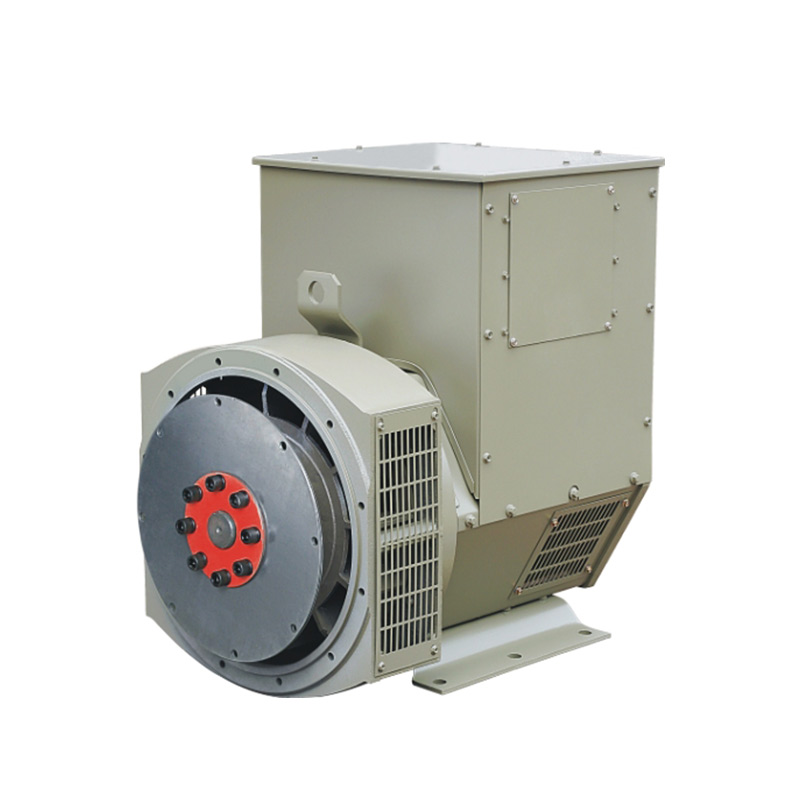
Choosing the right power source is often the difference between success and a catastrophic system failure. Have you noticedyour alternator is rated in kVA instead of watts? This distinction dictates how much equipment you can safely power. In this guide, you will learn why kVA matters for your system.

Key Takeaways
● Apparent Power vs. Real Power: kVA represents the total "apparent power" an alternator can handle, which includes both the working electricity (kW) and the non-working reactive power.
● Thermal Limits: The kVA rating is determined by the alternator windings' physical ability to carry current and dissipate heat without melting the insulation.
● The 0.8 Power Factor Rule: Most industrial machines are designed with a standard 0.8 power factor; falling below this forces the alternator to work harder to deliver the same usable wattage.
● Sizing for Surges: Proper sizing requires accounting for "Starting kVA," as electric motors can draw up to ten times their running current when first activated by the alternator.
● Safety Buffer: Experts recommend a 20-25% capacity margin above your peak load to extend the alternator lifespan and prevent voltage drops that damage sensitive electronics.
Deciphering kVA: The Gold Standard for Alternator Rating
To understand why an alternator uses kVA, we must look at the physics of AC generation. The basic formula for apparent power is:
$$S = V \times I$$
In this equation, $S$ is the apparent power (measured in VA or kVA), $V$ is voltage, and $I$ is current (Amperage). The alternator is essentially a giant heat exchanger. Its physical limits are determined by how much current can pass through its copper windings before the heat destroys the insulation.
It does not matter to the alternator whether the electricity is being used efficiently by a motor or wasted by a poor power factor. It only "sees" the total current flowing. If the amperage exceeds the design limit, the machine will overheat. This is why manufacturers rate their machines in kVA—it defines the absolute electrical ceiling of the hardware regardless of the connected load's efficiency.
Note: Always check the nameplate of your alternator for the rated amperage per phase to ensure you aren't pushing the copper windings past their thermal limit.
The Mechanics of kVA in Alternator Performance
Inside the alternator, a complex dance of magnetic flux and mechanical rotation creates the kVA capacity. The internal magnetic field cuts through the stator windings, inducing a voltage. The thickness of the copper wire in these windings—the gauge—directly dictates the current-carrying capacity. A higher kVA rating requires thicker copper and more robust cooling to handle the resulting thermal energy.
The Automatic Voltage Regulator (AVR) plays a silent but critical role here. As you add more load to the alternator, the voltage tends to drop. The AVR adjusts the excitation current to maintain a steady voltage, ensuring the "V" in our $V \times I$ formula remains constant so the kVA output stays stable.
However, the load we connect is rarely "pure." Most industrial equipment creates a mix of resistive and reactive currents. These combine through vector summation to create the total kVA load. Modern non-linear loads, such as LED lighting and variable speed drives, introduce harmonic distortion. This "dirty" power can reduce the effective kVA capacity of an alternator, making it run hotter than a standard linear load would.
Component | Role in kVA Capacity | Impact on Performance |
Stator Windings | Determines Max Amperage | Limits total heat threshold |
Rotor/Exciter | Maintains Voltage | Ensures stability under load |
AVR | Voltage Regulation | Prevents dips during kVA surges |
Cooling Fan | Heat Dissipation | Allows sustained high-kVA output |
kVA vs. kW: Why Your Alternator Cares About Both
There is a frequent tug-of-war between the engine and the alternator. The engine (the prime mover) is limited by its horsepower, which we measure in kilowatts (kW). The alternator (the electrical end) is limited by its current capacity, measured in kVA.
The relationship is defined by the Power Factor (PF):
$$kW = kVA \times PF$$
Imagine a 100 kVA alternator paired with an engine capable of 80 kW. If you have a perfect power factor of 1.0, you can pull 80 kW, and the alternator is fine because it is only seeing 80 kVA of "stress." However, if your power factor drops to 0.6, and you try to pull that same 80 kW, the alternator suddenly has to handle 133 kVA ($80 / 0.6$). The engine might keep turning, but the alternator windings will likely melt because the kVA limit has been shattered.
The Critical Influence of Power Factor on Alternator kVA
The industry standard for rating an alternator is a lagging power factor of 0.8. This is an "expectation" that for every 10 units of apparent power provided, 8 units will do real work. Inductive loads, like large industrial motors or transformers, "drain" more kVA because they require extra reactive power to create magnetic fields.
When the power factor is poor (e.g., 0.4 or 0.5), the alternator must work significantly harder. It has to circulate a large amount of "reactive" current that doesn't actually turn a shaft or heat a room, but still consumes the alternator's limited current capacity. On the other end of the spectrum, "leading" power factors—caused by excessive capacitors or long cable runs—can be even more dangerous. They can cause the alternator to lose control of its voltage, potentially leading to an over-voltage failure.
How to Correctly Size an Alternator Based on kVA Requirements
Sizing isn't just about adding up the numbers on the stickers. You must account for "Starting kVA" (SkVA). When an electric motor starts, it can draw six to ten times its running current for a few seconds. If your alternator doesn't have the "surge kVA" capacity to handle this, the voltage will collapse, and the motor will either fail to start or trip the breaker.
To size correctly, follow these steps:
● List all loads: Note the running kW and kVA for every piece of equipment.
● Identify the largest motor: Calculate its starting kVA requirements.
● Apply the 25% Rule: Industry experts generally suggest that your total peak load should not exceed 75-80% of the alternator's prime kVA rating. This provides a safety buffer for future growth and environmental factors.
Consequences of Ignoring kVA Limits in Alternators
If you ignore the kVA limits, the first sign of trouble is usually a smell—the scent of burning varnish. Overloading an alternator causes the internal temperature to skyrocket. This degrades the winding insulation, leading to short circuits that can be expensive or impossible to repair.
Beyond physical damage, an overloaded alternator creates "brownout" conditions. As it struggles to maintain the load, voltage fluctuates wildly. Sensitive electronics, such as PLC controllers or medical equipment, can be destroyed by these fluctuations. Furthermore, manufacturers can often tell if a machine has been run over its kVA limit by inspecting the discoloration of the stator. Doing so almost always voids your warranty, leaving you with a massive bill for a replacement.
Note: Install an external power monitor with an alarm that triggers when the kVA load reaches 90% of the alternator's capacity.
Maintenance Strategies to Protect Your Alternator’s kVA Output
To ensure your alternator consistently delivers its rated kVA, you must maintain its environment. Heat is the enemy. You should regularly check that the ventilation louvers are clear and the internal cooling fan is functional. Dust buildup on the windings acts as an insulator, trapping heat and effectively lowering the machine's kVA capacity.
Periodic "Load Bank Testing" is also essential. This involves connecting the alternator to a controlled artificial load to prove it can still hit its nameplate kVA without overheating. Finally, use an insulation resistance tester (Megger) during scheduled shutdowns. This tool can find tiny cracks in the winding insulation before they turn into a full-scale kVA failure.
Conclusion
The kVA rating defines the total current an alternator can handle before heat causes damage. Understanding how kVA combines real and reactive power helps you make smarter facility decisions. You should always prioritize kVA over kW to handle heavy industrial loads safely. High-performance machines from dcgenset provide superior thermal management and reliable power for any environment. Their expert team ensures your equipment perfectly matches your specific operational needs for long-term success.
FAQS
Q: Why is an alternator rated in kVA instead of kW?
A: An alternator is rated in kVA because its internal heat limit depends on total current, regardless of efficiency.
Q: How do I calculate kVA for my alternator?
A: Multiply the voltage by the amperage; this represents the total apparent power the alternator must support.
Q: Can a low power factor damage an alternator?
A: Yes, it forces the alternator to carry more reactive current, which can lead to dangerous overheating.
Q: What is the difference between kVA and kW?
A: kVA is total power, while kW is the actual work energy the alternator provides to your equipment.