In the high-stakes environment of cold chain logistics, equipment reliability is everything. An unreliable refrigerated truck generator quickly leads to catastrophic cargo loss. It also causes missed delivery windows. Both fixed and sliding gensets provide steady reefer trailer power. However, their mounting configurations fundamentally alter fleet operations. They change maintenance workflows, ground clearance profiles, and operating routines. You cannot make this procurement decision based on spec sheets alone. Choosing between a fixed undermount and a sliding unit requires practical evaluation. You must assess your fleet’s daily dock-level realities. You also need to look at your existing maintenance infrastructure and typical driver habits. The right mounting style keeps your trucks actively on the road. It also keeps your mechanics safe and efficient. Let us explore how these two structural configurations compare directly.
Key Takeaways
Under mount reefer generators prioritize optimal weight distribution and aerodynamics but present accessibility challenges for routine servicing.
Slide mount generators solve accessibility bottlenecks by sliding out laterally on rails, significantly reducing mechanic labor time, though introducing moving parts that require care.
The optimal choice depends directly on your facility’s maintenance capabilities (e.g., access to service pits) versus your typical loading dock clearance levels.
Retrofitting existing chassis is possible for both types, but structural integrity and warranty impacts must dictate the rollout strategy.
The Operational Impact of Genset Mounting Styles
Problem Framing
Mounting location is a primary decision-driver for fleet managers. It is never merely an afterthought in equipment design. The position of your generator dictates how your entire team interacts with the equipment. Mechanics must access it for servicing. Drivers must inspect it daily. The physical placement controls accessibility. It determines your vulnerability to road hazards. Choosing the wrong configuration leads to compounded daily frustrations. These frustrations eventually manifest as delayed routes and poor equipment upkeep.
Clearance Realities
Ground clearance represents a major operational hurdle. Fleets constantly face the threat of "high-centering" their equipment. This occurs on steep loading docks or aggressive railroad crossings. Poorly graded freight yards present similar dangers. A low-hanging fixed generator acts as a vulnerable strike point. Catastrophic damage happens quickly when units scrape the pavement. A cracked oil pan ruins a delivery schedule immediately. Planners must evaluate typical route topography. You need sufficient clearance for all expected delivery points.
Labor Hours
Maintenance accessibility hides significant operational costs. Mechanics frequently struggle to access basic engine components. They fight to reach oil drains on fixed undermounts. Replacing belts or checking air filters requires uncomfortable crawling. This awkward positioning adds unnecessary minutes to every single service ticket. Mechanics experience higher physical fatigue. Consequently, preventative maintenance often feels tedious. Easily accessible configurations eliminate these physical barriers completely. They turn difficult tasks into quick, routine procedures.
Weight Distribution
Chassis-mounted weight profoundly impacts physical driving dynamics. A generator adds substantial mass to the trailer underside. Proper weight distribution affects basic tire wear patterns. It directly alters emergency braking distances. Furthermore, fleets must comply strictly with highway axle weight regulations. An unbalanced chassis leads to handling issues for the driver. Centralized mounting points improve the trailer's center of gravity. This balance prevents dangerous trailer sway during highway transit.
Evaluating the Under Mount Reefer Generator
Structural Definition
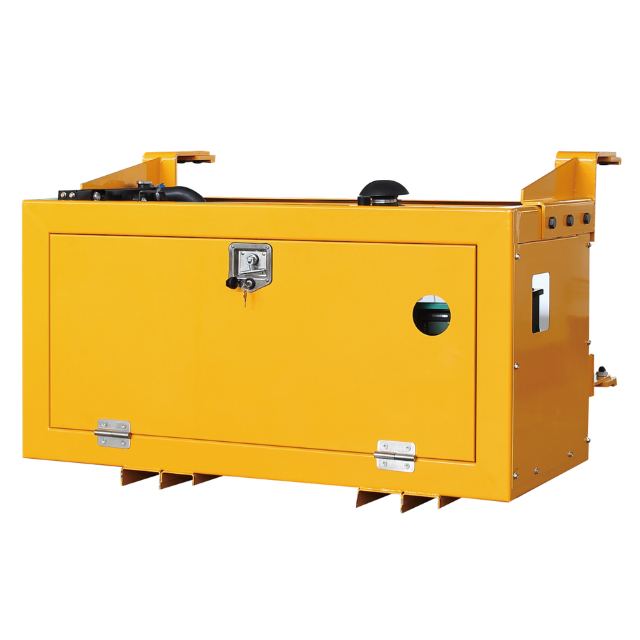
An under mount reefer generator is a traditional fixed power unit. Manufacturers bolt or weld these units directly beneath the container chassis. They sit securely in the center of the frame. This permanent placement provides a highly stable, immovable power source for refrigerated transport.
Primary Advantages
Excellent center-of-gravity: The central, fixed placement minimizes lateral trailer sway. It promotes remarkably even tire wear across all axles.
Lower impact risk: The tucked-in position protects the unit from side-impact damage. Drivers are less likely to sideswipe it during tight yard maneuvers.
Mechanical simplicity: Fixed mounts feature far fewer moving parts. They have no sliding rails or complex locking mechanisms to bind or corrode over time.
Operational Trade-offs
Service difficulty: Mechanics find them notoriously difficult to service. Proper maintenance requires a dedicated service pit or specialized heavy lifting equipment.
Clearance vulnerability: The inherently low ground clearance exposes the engine. The unit faces constant threats from road debris, snow buildup, and steep-grade impacts.
Inspection friction: Routine pre-trip inspections become incredibly cumbersome. Drivers must crouch low to check essential oil and fluid levels.
Evaluating the Slide Mount Reefer Generator
Structural Definition
A slide mount reefer generator utilizes an advanced under-chassis design. The unit sits on a heavy-duty sliding rail system. This ingenious track allows the entire genset to pull out laterally. It extends beyond the outer edge of the trailer chassis. This movement provides completely unobstructed access to the engine compartment.
Primary Advantages
Labor reduction: You see a drastic reduction in maintenance labor hours. Mechanics perform routine servicing while standing up comfortably rather than crawling underneath the chassis.
Improved visibility: The pull-out nature offers better visibility for driver pre-trip inspections. This convenience leads to higher compliance and significantly fewer on-road failures.
Modular swapping: A slide mount generator often features quick-swap capabilities. Technicians can rapidly replace the entire module if the sliding mechanism supports modular detachment.
Operational Trade-offs
Debris vulnerability: The sliding tracks are highly susceptible to dirt and ice. Salt accumulation quickly causes the mechanism to bind if maintenance teams neglect regular lubrication.
Increased weight: Fleets face a slightly higher initial tare weight. The heavy-duty track hardware adds mass to the trailer chassis.
Vibration risks: The moving parts introduce potential vibration risks. The generator unit can shift dangerously during transit if locking pins degrade or fail.
Head-to-Head Evaluation Framework
Infrastructure Match
Your existing maintenance facilities dictate your best mounting option. Fixed undermount units require dedicated service pits to be manageable. Mechanics cannot efficiently drain oil or change belts while lying on their backs. If your shop lacks pits, maintenance times will soar. Conversely, flat-bay maintenance facilities represent the perfect environment for sliding units. Mechanics simply deploy the rails and work from a comfortable standing position. You must match your equipment choice to your physical garage capabilities.
Route Terrain & Yard Conditions
Geographic routing plays a major role in equipment survival. Fixed profiles generally perform well on long-haul routes. They thrive moving between well-paved, modern distribution centers. The predictable terrain keeps clearance issues minimal. However, urban pickup and delivery operations present constant hazards. Drivers navigate steep alleys, awkward curbs, and broken pavement. Sliding profiles sometimes offer slightly adjusted clearances. More importantly, they allow rapid field repairs if debris damages the unit during a rough urban route.
Fuel Access & Capacity
Refueling ergonomics directly impact daily route times. Undermount units often tuck the fuel neck awkwardly beneath the trailer edge. Drivers struggle to position high-flow diesel nozzles correctly. This awkward angle causes frequent fuel spills and slower fueling times. Sliding mounts change this dynamic entirely. The unit pulls out to provide a clear, vertical approach to the fuel tank. Drivers enjoy easier nozzle angles. This ergonomic improvement reduces hazardous spills and keeps trucks moving through fuel islands faster.
Structural Comparison Chart
Evaluation Criteria
Fixed Undermount Genset
Sliding Mount Genset
Mechanic Posture
Lying down / Creeper required
Standing / Unobstructed access
Pre-Trip Inspection
Difficult visibility for drivers
Excellent visibility when deployed
Moving Parts
Minimal (engine only)
Moderate (rails, pins, bearings)
Refueling Ease
Awkward nozzle angles
Straightforward vertical access
Ideal Facility
Equipped with service pits
Standard flat-bay garages
Implementation Realities and Fleet Rollout
Retrofit vs. Factory Install
Implementing new generator styles requires a careful deployment strategy. Factory installations always provide the highest structural reliability. Manufacturers integrate the mounting hardware flawlessly into the chassis framework. Retrofitting older chassis presents distinct engineering challenges. Welding slide-mount tracks to potentially compromised trailer frames introduces structural risks. Heat from welding can weaken aged steel. You must inspect the chassis thoroughly before attempting aftermarket retrofits. Often, ordering factory-direct ensures you maintain all original equipment warranties.
Driver Training Protocol
Introducing sliding units requires mandatory operational updates for your drivers. You cannot assume they know how to secure the new equipment. An unlatched generator creates a massive highway hazard. You must implement a strict training protocol.
Deploy the Unit: Instruct drivers on properly disengaging the travel latch.
Perform Inspection: Teach them to check oil, coolant, and belt tension safely.
Retract Smoothly: Show them how to push the unit back without binding the rails.
Verify Locking Pins: Mandate a physical pull-test. Drivers must aggressively pull the unit to ensure locking pins fully engage before transit.
Preventative Maintenance Adjustments
Your shop schedules must evolve alongside your new hardware. Standard undermounts require traditional engine PMs. Mechanics change the oil, replace filters, and check electrical connections. Sliding mounts demand additional procedural steps. Technicians must aggressively clean the track system. They need to apply specialized weather-resistant grease to the rails. Inspecting the heavy-duty lock-latches becomes a critical safety requirement. If the latching mechanism degrades, the unit becomes a liability. Update your shop software to include these specific lubrication tasks.
Vendor Selection
Choosing the right manufacturing partner protects your investment. You must vet vendors based on their complete engineering package. Do not merely look at the engine brand or alternator specs. Pay close attention to the slider hardware itself. Ask about the metallurgical properties of the track rails. Inquire about replacement parts availability for the locking pins. Ensure the vendor provides comprehensive warranty coverage specifically for the sliding mechanism. The best engine means nothing if the mounting rails collapse after one harsh winter.
Conclusion
Fleet operators must align their equipment choices with actual daily realities. Standard fixed undermount generators remain an excellent choice for specific scenarios. They are best for fleets with established pit-maintenance facilities and highly predictable, flat highway routes. Conversely, sliding mounts are the clear choice for dynamic operations. They serve fleets prioritizing rapid flat-bay servicing, high driver inspection compliance, and reduced mechanic fatigue.
Your next steps require data analysis. We advise logistics managers to audit their last 12 months of genset repair logs. Specifically note the ratio of mechanic labor hours versus actual parts replaced. Review your historical yard damage incidents. If labor hours are disproportionately high due to difficult access, a sliding configuration will solve your problem. Make your procurement decision based on internal operational data rather than external marketing claims.
FAQ
Q: Does a slide mount generator reduce ground clearance compared to a standard under mount?
A: Yes, it typically introduces a slight reduction in ground clearance. The additional rail hardware and sliding brackets sit below the chassis frame. While the drop is usually minimal (one to two inches), fleets must account for this when navigating extremely steep loading docks to prevent scraping.
Q: Can you retrofit an existing fixed under mount into a slide mount?
A: You can retrofit using aftermarket slider kits. However, structural feasibility depends on your existing chassis condition. The frame must safely support new welding or bolting. Consider the high labor costs of retrofitting versus simply specifying sliding mounts on your next new chassis order.
Q: How does the track system handle harsh winter conditions?
A: Winter conditions pose a significant challenge. Road salt, snow, and ice readily accumulate inside the sliding tracks. The mechanism will bind if ignored. Shops must implement strict lubrication protocols using cold-weather, water-resistant greases. Drivers must also clear heavy ice buildup before attempting to deploy the unit.
Q: Are slide mount gensets compatible with all container chassis types?
A: No, they are not universally compatible. Certain specialized chassis designs lack the necessary mid-frame space. Gooseneck designs or specific slider-bogie configurations often interfere with the lateral track movement. You must verify structural compatibility with your chassis manufacturer before purchasing sliding hardware.
DONGCHAI POWER devotes itself to manufacuring and maintenance of different types generator, diesel generator, gas generator, silent generator, reefer generator, container generator and sychronization generator.