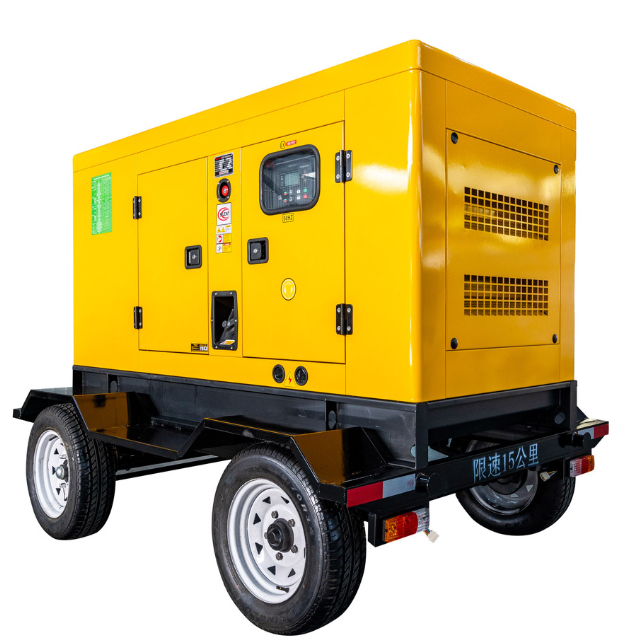
Remote work sites operate under extreme pressure, where reliable power is the absolute lifeblood of productivity. Every unexpected minute of power loss brings heavy machinery to a grinding halt. This downtime directly destroys project timelines and severely bloats labor costs, turning a profitable job into a financial liability. To prevent this, contractors must understand the crucial difference between consumer-grade portables and commercial-grade mobile units. Small residential generators cannot handle heavy industrial loads. They simply lack the rugged durability, high voltage output, and sustained endurance required for continuous operations. In contrast, deploying a commercial-grade trailer generator provides a robust, mobile electricity source specifically engineered for heavy-duty applications. Securing reliable power demands a precise evaluation framework. You must carefully match equipment output, fuel type, and mobility features to your specific site demands. This comprehensive guide details exactly how to assess these critical factors, helping you mitigate operational risks and maintain uninterrupted field productivity.
Key Takeaways
Accurate load calculation must account for starting (surge) watts to avoid equipment failure and voltage drops.
Portable diesel generators remain the industry standard for continuous remote operations due to fuel availability and engine longevity.
Terrain, towing capacity, and hitch compatibility dictate the practical mobility of a towable generator.
Implementation planning must include maintenance intervals, telematics, and local emissions compliance (e.g., Tier 4 Final).
Defining Remote Site Power Requirements and Downtime Risks
Running an off-grid job site involves constant operational pressure. Inadequate power immediately halts production and creates severe ripple effects. Heavy machinery requires reliable electricity to function properly. Without it, your labor costs skyrocket instantly. You end up paying crews simply to stand idle. Project timelines slip past unyielding deadlines, triggering contractual penalties. The financial drain of inadequate site power often exceeds the purchase price of premium equipment.
Traditional stationary generators create massive logistical headaches for dynamic teams. They require heavy cranes for placement and removal. Phased construction projects need agile equipment positioning as work zones shift. Conversely, small residential generators offer easy movement but lack necessary output. They trip instantly when connected to heavy industrial tools. Small units also lack the hardened components required to survive daily dust, vibration, and extreme temperatures.
A mobile power generator solves this exact dilemma. It bridges the gap between massive electrical output and vital site mobility. You get industrial-grade electricity exactly where you need it, exactly when you need it. Crews can tow the unit across rugged terrain directly to new pumping stations or welding zones.
Scalability remains a critical consideration during early site planning. A single massive unit often operates inefficiently under highly variable daily loads. Paralleling multiple smaller units provides much better flexibility. Redundant systems prevent total site blackouts during unexpected mechanical failures. If one unit requires an oil change, the second unit keeps critical lighting and communication systems active.
Sizing Your Trailer Generator: Load Calculations and Capacity Traps
Load calculation demands extreme technical accuracy. You must understand the distinct difference between starting watts and running watts. Running watts represent the continuous electrical power required to operate equipment. Starting watts represent the initial surge required by heavy electric motors. Cranes, large air compressors, and industrial saws draw massive surge currents. This initial draw often doubles or triples the normal running requirement. Ignoring surge watts causes immediate breaker trips. Severe voltage drops will also permanently damage sensitive tool motors.
Phase and voltage requirements dictate your final equipment selection. Single-phase 120/240V systems run standard hand tools, small pumps, and site lighting. Three-phase 208/480V systems power heavy commercial machinery and large tower cranes. Multi-site contractors benefit greatly from utilizing voltage selector switches. These switches allow operators to toggle outputs safely based on specific job needs.
Power Requirement Type
Definition & Characteristics
Typical Equipment
Running Watts
Continuous power needed to keep equipment operating normally.
Lighting towers, heaters, standard electronics.
Starting (Surge) Watts
Brief, high-intensity power spike needed to overcome motor inertia.
Air compressors, heavy water pumps, hoists.
Single-Phase (120/240V)
Standard alternating current for lighter commercial applications.
Power tools, site office trailers, small mixers.
Three-Phase (208/480V)
High-efficiency power delivery for heavy industrial loads.
Tower cranes, industrial welders, large HVAC.
Oversizing your equipment introduces severe operational risks. Buying excessive capacity seems like a safe strategy, but it actively destroys engines. Diesel engines require high operating temperatures to burn fuel efficiently. Running them below thirty percent capacity prevents proper internal heating. Unburned fuel builds up in the exhaust system rapidly. This dangerous condition is called "wet-stacking." Wet-stacking glazes engine cylinders, ruins turbochargers, and drastically reduces overall performance. Always match capacity closely to your calculated peak loads to ensure clean burns.
Fuel Ecosystems: The Case for Portable Diesel Generators
Choosing the right fuel type heavily impacts long-term remote operations. You must carefully evaluate diesel, natural gas, and bi-fuel options. Natural gas requires dedicated pipeline access, limiting off-grid utility completely. Bi-fuel models offer flexibility but significantly increase internal mechanical complexity. Because of these factors, a portable diesel generator remains the undisputed industry standard. Diesel fuel boasts exceptional energy density, providing more power per gallon. Fuel delivery trucks can easily reach remote sites to refill equipment directly.
Endurance depends heavily on onboard fuel tank capacity. You must evaluate tank sizes against your continuous run-time needs. Industry standards typically measure fuel consumption rates at a seventy-five percent load. A 24-hour tank suits daily operations requiring standard overnight shutdowns. Conversely, a 48-hour tank supports continuous weekend pumping operations without requiring an emergency fuel drop.
Emissions compliance presents another mandatory evaluation layer for fleet managers. Modern construction equipment must meet strict EPA Tier 4 Final regulations. These environmental rules drastically reduce particulate matter and harmful nitrogen oxides. Tier 4 Final engines require Diesel Exhaust Fluid (DEF) to treat exhaust gases. DEF management requires careful logistical planning. The fluid degrades rapidly in extreme summer heat and freezes solid in severe winter cold. Your site team must handle DEF storage properly to prevent engine derating or unexpected shutdown codes.
Mobility and Durability: Assessing Towable Generator Specs
Physical mobility dictates how easily crews can reposition power across a site. Towing infrastructure requires specific mechanical attention. Heavy off-road applications typically utilize a rugged pintle ring hitch. Pintle rings articulate exceptionally well over severely uneven ground. Standard ball hitches work adequately for lighter highway transport between paved sites. You must also verify your designated vehicle towing capacities before deployment. Heavy trailer units require integrated trailer brake systems to stop safely. Surge brakes operate hydraulically based on vehicle momentum. Electric brakes provide smoother stopping power but require wired cab controllers.
Terrain adaptability ultimately determines field success. You must evaluate the chassis against your expected environment.
Axle Ratings: Ensure the suspension system safely handles the full fuel weight over rough, rutted access roads.
Ground Clearance: High clearance prevents catastrophic undercarriage damage when navigating unpaved, rocky terrain.
Tire Types: Select heavy-duty, multi-ply tires to prevent punctures in debris-filled demolition zones.
Enclosures protect your vital investment from harsh weather elements. Steel housings offer extreme structural durability against impact. However, steel rusts quickly if deep scratches expose the bare metal. Aluminum enclosures resist corrosion brilliantly, making them perfect for coastal or highly corrosive environments. Sound attenuation also matters greatly on modern sites. High-quality enclosures feature dense acoustic foam paneling. This specialized foam lowers decibel (dB) ratings significantly. Lower noise levels ensure strict compliance with local residential ordinances. Quiet operation proves absolutely essential for overnight urban deployments. A properly silenced towable generator prevents costly noise complaints and project stop-work orders.
Implementation Risks: Telematics and Maintenance
Deploying heavy equipment introduces ongoing operational risks. You must manage site telemetry and field service effectively to prevent failures. Remote monitoring features are no longer optional luxury add-ons. Modern telematics systems provide crucial GPS tracking capabilities. This location tracking secures expensive mobile assets against organized job site theft. Remote diagnostics instantly alert site managers to dropping fuel levels. Preventing complete dry-outs saves hours of manual fuel system bleeding. Site managers can also track load efficiency remotely to detect wet-stacking conditions early.
Maintenance realities require strict scheduling and disciplined execution. You must set realistic expectations for field service interventions.
Fluid changes: Engine oil degrades rapidly under constant heavy industrial loads.
Filter replacements: Dusty excavation environments choke standard air filters in a matter of days.
Service intervals: Standard setups require comprehensive service every 250 hours. Advanced synthetic fluids and upgraded filtration systems can extend this to 500-hour intervals.
Load-bank testing: Periodic artificial loading safely burns off harmful carbon deposits accumulated during light usage phases.
Failing to adhere to these intervals voids warranties and invites catastrophic engine failure. Field teams must maintain strict logs of every service action performed on site.
Shortlisting Criteria: Renting vs. Buying a Construction Site Generator
Securing the right equipment involves a crucial operational decision. You must choose objectively between renting and buying. Project duration usually dictates this utilization logic clearly. Temporary projects lasting under six months strongly favor rental agreements. Renting eliminates long-term storage requirements and shifts intensive maintenance burdens to the supplier. Conversely, permanent fleet additions make sense for multi-year structural developments. Owning an asset provides rapid, guaranteed deployment capabilities for future emergency jobs.
Vendor evaluation ensures long-term operational success regardless of your acquisition method. Ask suppliers tough technical questions before signing any contracts. What does the factory warranty cover precisely? How quickly can specialized field service technicians respond to site emergencies? Do they stock critical replacement parts locally? A reliable vendor acts as an invested operational partner. A poor vendor leaves your crew stranded during critical outage events.
Your next step requires immediate technical action. Conduct a comprehensive site power audit before doing anything else. Document every piece of machinery requiring electricity. Note their specific starting wattages, running draws, and phase requirements carefully. Secure this verified data before requesting any formal quotes. Reliable remote site power demands precise logistical planning. Choosing a construction site generator carelessly guarantees future delays and blown budgets.
Conclusion
Choosing the optimal mobile equipment requires careful technical balancing. You must expertly align accurate load sizing, fuel efficiency, and physical chassis durability. Failing to account for surge watts or harsh terrain will compromise your entire operation. Reliable power acts as a direct investment in project continuity. It represents far more than a simple operational overhead cost.
Take proactive steps to secure your off-grid capabilities today. Contact your technical team to request a custom load calculation for your specific heavy machinery. Review the current equipment inventory to find the exact match for your upcoming site requirements.
FAQ
Q: Can a trailer generator run continuously for days?
A: Yes, they can run continuously if sized and fueled correctly. However, run-time depends directly on the onboard fuel tank capacity and the applied load. Operators must still pause operations briefly to check oil levels and perform daily visual inspections. Auxiliary fuel tanks can safely extend operations for several days.
Q: Do I need a CDL to tow a mobile power generator?
A: It depends entirely on the combined weight. You generally need a Commercial Driver's License (CDL) if the Gross Combined Weight Rating (GCWR) of your towing vehicle and the trailer exceeds 26,000 pounds. Always check specific Department of Transportation (DOT) weight regulations for your local jurisdiction.
Q: How do I prevent my construction site generator from wet-stacking?
A: Prevent wet-stacking by never oversizing your equipment. Always ensure the unit operates at a minimum of 30% to 50% of its rated capacity. This maintains the high exhaust temperatures needed to burn fuel completely. If light loads are unavoidable, perform periodic load-bank testing to burn off carbon deposits.
Q: Is it better to use one large generator or parallel two smaller towable generators?
A: Paralleling two smaller units is generally better for dynamic remote sites. It provides critical redundancy. If one unit fails or needs servicing, the other maintains essential site power. It also saves fuel, as you can shut down one unit when site power demands decrease during off-peak hours.
DONGCHAI POWER devotes itself to manufacuring and maintenance of different types generator, diesel generator, gas generator, silent generator, reefer generator, container generator and sychronization generator.