Choosing between an open and silent generator stands as a high-stakes infrastructure decision. It is never just a casual personal preference. If you choose incorrectly, you risk facing severe noise compliance fines. Alternatively, you might waste your budget on unnecessary acoustic canopies. An industrial diesel genset provides critical electricity during unexpected grid failures. However, its physical housing ultimately dictates exact installation requirements. The enclosure type defines where and how you deploy the machine safely. Therefore, making the right choice demands a strict evaluation of your site location. You must assess local acoustic regulations carefully before finalizing any plans. Planners must also weigh upfront prices against long-term operational infrastructure needs. We will guide you through these crucial technical differences below. You will learn exactly how to match equipment to your specific regulatory demands.
Key Takeaways
Open type diesel generators deliver maximum cooling efficiency and unhindered maintenance access but require a dedicated, sound-dampened indoor plant room.
Silent diesel generators provide built-in generator noise control and weather protection, making them mandatory for urban, residential, or exposed outdoor environments.
The upfront cost savings of an open generator are often offset if a facility must construct a custom weatherproof and acoustically treated enclosure from scratch.
Final selection should be driven by local decibel (dB) limits, thermal management capabilities, and spatial constraints.
Core Structural Differences Defined
You must understand the physical anatomy of both systems before making a purchasing decision. Their external design dictates everything from thermal behavior to acoustic output. You cannot swap them interchangeably across different environments.
The Open Type Diesel Generator
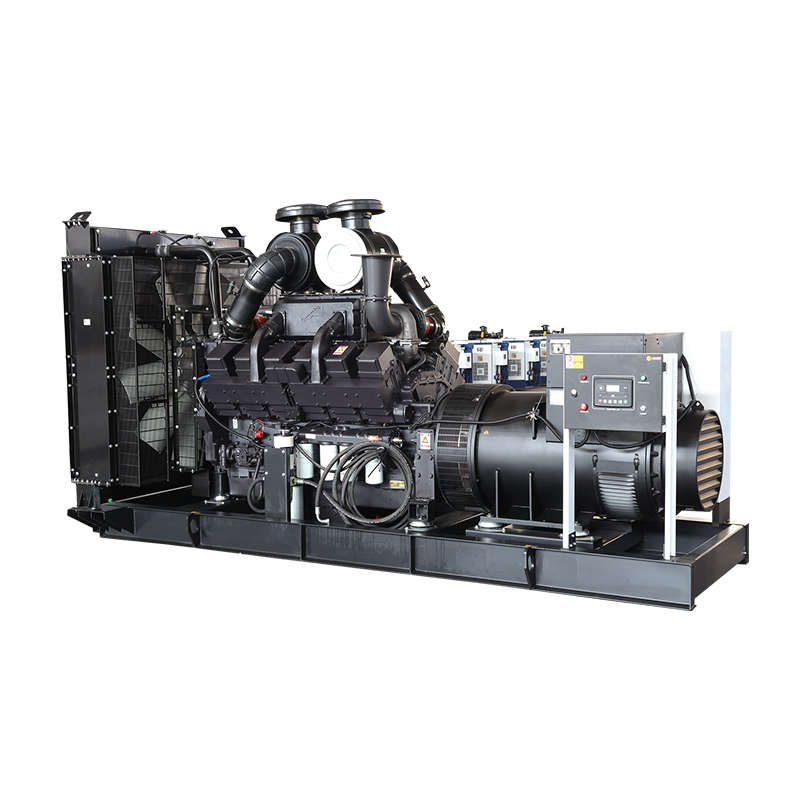
An open type diesel generator features an engine and alternator mounted directly onto a heavy steel skid base. It lacks any protective external canopy. Manufacturers design these raw units exclusively for dedicated utility spaces indoors. You can easily identify them by their completely exposed components.
Strengths:
Rapid heat dissipation: The lack of a metal shell allows maximum ambient airflow around the engine block. The radiator breathes freely.
Lower upfront purchase cost: Without the added steel and acoustic foam, material costs drop significantly during manufacturing.
360-degree maintenance access: Mechanics appreciate the unhindered layout. They can reach oil filters, fan belts, and alternators without obstruction.
Vulnerabilities:
They offer absolutely zero weather protection. Rain, snow, and blowing dust will rapidly degrade exposed engine components. Furthermore, they provide zero noise attenuation. An active unit often exceeds 100 dB at a one-meter distance. This noise level resembles a commercial jet taking off nearby.
Best Practice: Always plan for heavy acoustic insulation in your facility walls if you select this bare unit for your project.
The Silent Diesel Generator
A silent diesel generator encloses a standard generating set inside a fabricated metal canopy. Engineers treat this canopy extensively using high-density acoustic foam and complex sound-absorbing baffles. It functions as a complete self-contained power island.
Strengths:
Turnkey weatherproofing: Most carry robust IP ratings protecting internal electronics from harsh environmental elements.
Substantial noise reduction: A quality canopy drops operational noise to 65-75 dB at a seven-meter distance. This equals the volume of a normal office conversation.
Higher physical security: Locking steel doors protect against tampering, vandalism, or fuel theft.
Vulnerabilities:
You will face a considerably higher initial capital expenditure. The heavy steel enclosure adds significant fabrication and shipping costs. The canopy also restricts natural airflow heavily. This necessitates specialized exhaust designs and powerful internal cooling fans. Mechanics face slightly more complex maintenance access. They must work entirely through specific service panels or access doors.
Common Mistake: Do not place pallets or boxes directly against the canopy vents. Doing so starves the engine of vital intake air and causes immediate overheating.
Key Evaluation Dimensions for Decision Makers
Selecting the right housing requires looking far beyond the primary spec sheet. You must evaluate real-world site conditions and strict local laws. Ignoring these factors leads to disastrous deployment failures.
Acoustic Compliance and Site Location
Noise pollution laws dictate many industrial equipment choices today. You must meticulously assess local municipal noise ordinances before purchasing anything. Urban areas and commercial zones usually mandate strict decibel limits exactly at the property line. Failing an acoustic audit often results in immediate operational shutdowns from city officials.
If you install a backup power generator outdoors near human activity, the enclosed model becomes strictly non-negotiable. Office buildings, retail centers, and residential blocks simply cannot tolerate 100 dB of engine roar. You must factor in the exact distance from the exhaust point to the nearest neighbor. Every doubling of distance drops the perceived noise by roughly six decibels. Calculate this acoustic decay carefully before finalizing your outdoor site layout.
Initial Investment vs. Hidden Infrastructure Costs
Many buyers simply compare the base unit price tags side-by-side. This simplistic approach creates dangerous budget shortfalls later. A bare unit clearly wins the initial purchase price battle. However, you must calculate the hidden infrastructure costs associated tightly with it.
You cannot just drop a bare unit onto a concrete pad outside. You must construct a highly ventilated, sound-proofed plant room completely around it. This room requires heavy structural vibration mounts to protect building integrity. You must also fund custom exhaust routing through the building architecture. Often, the cost of constructing this specialized indoor room far exceeds the price premium of a factory-silenced canopy. Facility managers frequently regret ignoring these secondary construction expenses.
Thermal Management & Derating Risks
Extreme ambient temperatures directly affect engine combustion performance. High ambient heat reduces the density of intake air significantly. This causes engines to lose combustion efficiency quickly. Industry professionals refer to this phenomenon as power derating.
An exposed unit breathes much easier in hot climates. Unrestricted ambient air cools the radiator and massive engine block naturally. Conversely, enclosed units require heavily engineered airflow within the canopy. Massive cooling fans must push immense volumes of air through restrictive sound baffles continuously. If the internal ambient temperature rises too high, the electronic control module will automatically throttle power. In extreme cases, it triggers an immediate high-temperature shutdown. You must ensure adequate spatial clearance around enclosed units to prevent dangerous hot air recirculation.
Implementation Realities: The Open Generator Ecosystem
Choosing an exposed machine means committing to a complex indoor installation process. You must engineer the surrounding environment meticulously to support the machine safely. Consider these structural realities before committing.
Infrastructure Requirements
You need a purpose-built indoor facility. This plant room serves as the external protective shell. Planners must execute several specialized structural upgrades:
Reinforced flooring: You must pour specialized concrete pads to handle intense dynamic operational loads.
Acoustic cladding: The walls need industrial-grade acoustic panels to contain the deafening mechanical noise.
Spill containment: You must build curbed containment areas around the skid to catch potential diesel or oil leaks safely.
Furthermore, you must secure the room against unauthorized personnel. High-voltage connections and fast-spinning fan belts pose severe safety hazards to untrained staff.
Ventilation Engineering
An enclosed room quickly becomes an oven without proper airflow. You must install massive intake louvers directly on the exterior walls. These openings allow fresh outside air to feed the engine combustion cycle. You also need dedicated radiator discharge ductwork. These specific ducts push boiling air strictly outside the building envelope.
Many modern facility designs incorporate motorized dampers on the wall louvers. These dampers close completely when the machine stops running. This mechanism prevents freezing winter air from chilling the engine block unnecessarily during standby periods. Designing this airflow system requires specialized HVAC engineering knowledge.
Maintenance Workflow
Fleet managers reap significant operational benefits from an exposed configuration. Mechanics perform routine visual inspections extremely rapidly. They can spot tiny oil leaks or loose belts from across the room instantly. Replacing heavy internal components requires noticeably less physical effort.
Technicians can position engine hoists directly over the machine easily. They never have to unbolt heavy canopy panels. They avoid maneuvering large wrenches into dark, cramped canopy corners. This speed proves invaluable during high-pressure emergency repair scenarios.
When to Mandate a Silent Diesel Generator
Certain project environments eliminate the possibility of an exposed unit immediately. You must utilize enclosed solutions in these three specific scenarios to ensure operational success.
Exposed Outdoor Deployments
Canopied units remain absolutely essential for open-air environments. Construction sites, remote mining camps, and temporary event stages represent prime examples. Building a dedicated concrete room in these fluid, temporary environments is physically impossible. You need rugged equipment capable of surviving torrential rain and blowing dust. Enclosed models act as robust, self-contained power islands. A forklift or heavy crane can drop them onto a dirt site, and they begin generating power immediately.
Space-Constrained Facilities
Urban real estate rarely leaves room for massive generator buildings. Enclosed models prove ideal for crowded commercial rooftops. They also fit perfectly into tight delivery alleys. In these cramped urban locations, the machine often sits mere feet from strict property boundaries. Integrated generator noise control keeps your business legally compliant. The weather-sealed shell actively protects sensitive electronics from relentless rooftop weather extremes.
Strict Regulatory Environments
Some vital industries face relentless scrutiny regarding environmental impacts. Hospitals, massive data centers, and dense residential blocks enforce strict zero-tolerance noise policies. Local authorities audit generator noise levels rigorously during routine weekly testing. An enclosed canopy provides certified, predictable decibel reductions immediately. You bypass the complex guesswork of designing a custom soundproof room. The manufacturer guarantees the acoustic performance right out of the factory box.
Project Matching Matrix
Decision makers often struggle to align equipment capabilities with specific facility needs. We designed this detailed matching matrix to streamline your choice. Review your industry profile below.
Heavy Industrial and Manufacturing
These massive sectors lean heavily toward the open generator. Large factories usually possess ample indoor space. They can dedicate an entire utility outbuilding exclusively to power generation. These demanding applications prioritize raw, continuous power output above all else. They also require incredibly fast maintenance turnarounds to prevent expensive assembly line downtime. Noise aesthetics rarely matter inside a sprawling, naturally noisy steel mill.
Commercial Real Estate and Retail
These consumer-facing environments lean strictly toward the enclosed configuration. Property managers prioritize a small physical footprint. They care deeply about visual aesthetics and daily tenant comfort. A loud, exposed engine would drive valuable customers away. It would trigger immediate tenant complaints. The clean, painted box of an enclosed model blends easily into professional landscaping or modern rooftop architecture.
Remote Telecom and Civil Construction
These specialized fields demand the enclosed model exclusively. They operate in harsh, highly isolated locations. They prioritize intense weather protection. Telecom towers need a rapid drop-and-play deployment strategy. Crews simply drop the unit, connect the necessary cables, and leave the site. Planners have no time or budget to construct protective structures on remote mountaintops.
At-a-Glance Decision Chart
Application Profile
Recommended Type
Primary Justification
Basement Plant Room
Open Type
Existing concrete walls provide noise control; unhindered maintenance.
Hospital Rooftop
Silent Type
Extreme noise restrictions; direct harsh weather exposure.
Mining Camp
Silent Type
High dust environments; rapid temporary deployment needed.
Factory Utility Shed
Open Type
Maximum thermal efficiency; raw power prioritization.
Conclusion
Understanding your power infrastructure demands saves crucial capital and ensures strict regulatory compliance. We have seen that an exposed unit functions strictly as a raw component. It requires a highly controlled, engineered indoor environment to operate safely. Conversely, a silenced machine operates as a fully self-contained power solution. It conquers harsh weather and strict acoustic limits effortlessly.
You must advise your project stakeholders to look far beyond the initial purchase price. Conduct a thorough site acoustic audit first. Calculate the true financial burden of building a ventilated, soundproofed indoor plant room. Often, defaulting to the seemingly cheaper bare unit causes unexpected construction overruns.
Do not leave your emergency power strategy to simple guesswork. We highly recommend consulting with an industrial power engineer immediately. Request a comprehensive site evaluation to pinpoint your exact thermal, spatial, and acoustic requirements.
FAQ
Q: What is the actual decibel difference between an open and silent diesel generator?
A: The difference is massive. A bare unit typically produces between 100 and 110 dB. This intense volume mirrors a live rock concert. In contrast, an acoustically treated enclosed unit reduces noise to 65-75 dB at a standard 7-meter distance. This significantly lower level matches the volume of busy street traffic or a loud conversation. You can safely stand nearby without experiencing physical ear pain.
Q: Can you convert an open type generator into a silent one later?
A: Yes, you can retrofit a bare unit later. You accomplish this by installing a custom acoustic enclosure or a drop-over canopy. However, we strongly warn against this approach. Retrofitting usually costs significantly more than buying a factory-built enclosed model initially. Furthermore, custom additions often lack tested aerodynamic efficiency. They can disrupt critical airflow and cause severe engine overheating.
Q: Do silent generators require more frequent maintenance?
A: The internal engine and alternator maintenance intervals remain completely identical. However, the external enclosure does demand secondary upkeep. You must routinely inspect the heavy door seals and lubricate the steel hinges. Technicians must check the internal acoustic foam for degradation or dangerous oil soaking. Finally, you must constantly clear leaves and debris from the specialized canopy air intake vents.
DONGCHAI POWER devotes itself to manufacuring and maintenance of different types generator, diesel generator, gas generator, silent generator, reefer generator, container generator and sychronization generator.