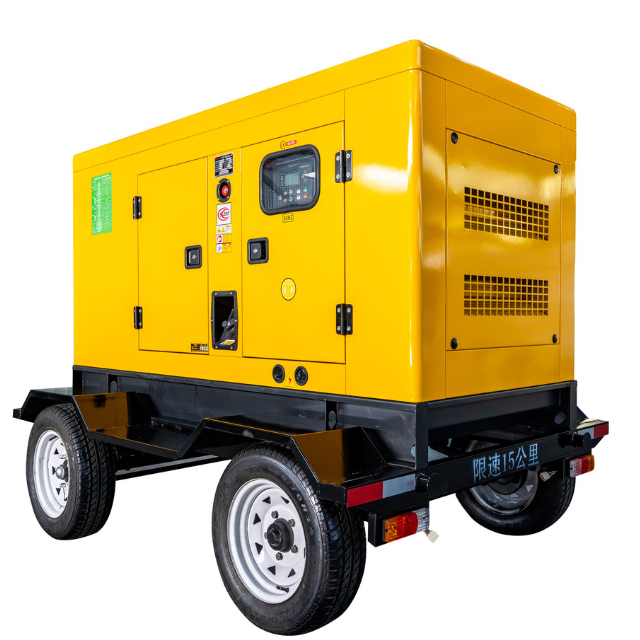
Achieving reliable power during prolonged grid failures goes far beyond simply buying a larger fuel reservoir. True continuous power functions as a synchronized system. It requires optimal load management, disciplined maintenance cycles, and secured fuel logistics. We must view backup power as a living infrastructure rather than a static piece of hardware.
Many operators fall into a dangerous trap. They assume all mechanical generators offer unlimited performance. This "infinite runtime" concept is a marketing myth. Every generator has strict operational ceilings. Overestimating these limits often causes catastrophic engine failure right when you need power most. You cannot ignore mandatory cooling periods or fluid degradation without facing severe consequences.
We will examine exactly how to calculate and extend your operational limits. You will learn the mathematics of fuel consumption, hardware optimization strategies, and logistics planning. We will guide you through practical methods to keep your facility running seamlessly. By the end, you will understand how to orchestrate a resilient power strategy.
Key Takeaways
Load dictates efficiency: Operating at a 50–80% diesel generator load maximizes fuel economy while preventing engine damage.
Mechanical limits: Even prime/continuous generators require mandatory shutdowns (typically every 500 hours) for cooling and fluid replacement.
Reliability drop-off: Real-world data (e.g., NREL) shows that generator mechanical reliability drops to roughly 80% when running continuously for two weeks (336 hours).
Logistics over hardware: True continuous power relies on a 24/48-hour fuel delivery safety margin, not just on-site storage.
Defining Realistic Runtime Limits by Equipment Class
You must understand the exact operational ceilings of different generator categories. This sets accurate deployment expectations. Overworking a small unit leads to rapid thermal breakdown. Conversely, running a massive industrial unit for minor loads causes hidden mechanical wear. We categorize generators by their cooling mechanisms and intended duty cycles.
Portable and air-cooled units serve highly specific short-term roles. You must limit their continuous use to intervals of 6 to 12 hours. Air-cooled engines rely entirely on ambient airflow. They struggle in hot environments. You must enforce a mandatory 30-to-120-minute shutdown. This pause allows internal components to cool and prevents thermal failure.
Standby and emergency units handle acute outages. They operate comfortably in 8-to-24-hour bursts. Engineers design these liquid-cooled machines to bridge temporary utility gaps. They do not engineer them for multi-week prime power usage. Pushing a standby unit past its intended duty cycle accelerates component degradation.
Prime and continuous duty systems feature robust liquid-cooling architectures. They handle extended runs effortlessly. However, the industry standard mandates a full shutdown every 500 hours. You must perform oil changes and replace fuel filters at this interval. National Renewable Energy Laboratory (NREL) data highlights a critical reality. Even perfectly maintained emergency systems see their reliability degrade to roughly 80% after two weeks of nonstop operation.
Equipment Class
Cooling Type
Safe Continuous Window
Mandatory Rest / Maintenance
Portable / Light Duty
Air-Cooled
6–12 Hours
30–120 minutes cooling rest
Standby / Emergency
Liquid-Cooled
8–24 Hours
Daily fluid checks; limited multi-day use
Prime / Continuous
Advanced Liquid-Cooled
Up to 500 Hours
Full shutdown for oil & filter changes
The Mathematics of Diesel Generator Fuel Efficiency
Determining exact backup generator runtime requires transparent calculations. You cannot rely on guesswork when powering critical infrastructure. We use a standardized formula to predict fuel burn rates under varying operational stresses. This approach removes uncertainty during prolonged grid failures.
Consider this baseline formula for your calculations:
The percentage of capacity actually drawn by your facility.
Efficiency
The baseline thermal conversion rate (typically around 30%).
We must understand the physical realities of thermal efficiency. A standard emergency power generator operates at roughly 30% thermal efficiency. Most energy escapes as exhaust heat or mechanical vibration. You can significantly improve generator fuel efficiency by managing how hard the engine works.
The 50% capacity mark represents the operational sweet spot. Running an engine at exactly half-load balances fuel economy and combustion temperature perfectly. Pushing the engine to 100% capacity exponentially burns fuel. Conversely, running below 30% creates dangerous inefficiencies.
Running on too light a load introduces severe implementation risks. Drastically oversizing your unit causes the engine to run cold. This triggers "wet stacking." Unburned fuel and carbon build up inside the exhaust system. Wet stacking severely degrades performance and creates massive fire hazards. You must size your equipment to run comfortably near the middle of its capacity.
Load Management & Hardware Optimization
Reducing your initial electrical demand directly extends your fuel reserves. Intelligent load management reduces the burden on your diesel generator fuel tank. You do not always need to power an entire facility. Strategic isolation proves much more effective during long outages.
We strongly challenge the "whole house" or "whole facility" assumption. Zoned backup power isolates critical circuits. You should prioritize HVAC systems, cold chain storage, and server rooms. Dropping non-essential lighting and secondary appliances drastically lowers the required kW capacity. This zoning approach saves massive amounts of fuel over a multi-day event.
Motors and compressors require massive energy spikes to start up. This startup surge often forces buyers to purchase overly large generators. You can mitigate this issue using specialized hardware. Soft starters smoothly ramp up the voltage sent to heavy motors. Reducing startup amp spikes allows a much smaller generator to handle larger equipment without stalling.
Follow these actionable steps to build a precise power budget:
List every mission-critical appliance or server rack.
Record the steady-state running wattage for each item.
Identify the surge wattage (starting amps) for compressor-driven devices.
Add the highest single surge wattage to your total steady-state wattage.
Multiply this total by your anticipated outage duration to find your required kWh.
Bridging the Gap: Integrating UPS for Zero-Downtime Systems
Mission-critical facilities face a physical reality during grid failure. Mechanical engines cannot start instantly. An automatic transfer switch detects the voltage drop, signals the engine to crank, and waits for stable output. This entire process usually takes between 10 and 15 seconds. Servers, medical devices, and industrial controls will crash during this delay.
An Uninterruptible Power Supply (UPS) remains absolutely mandatory. The UPS catches the millisecond voltage drop. It sustains pure sine wave power using its internal batteries until the diesel engine reaches synchronous speed. Once the generator stabilizes, the UPS seamlessly transfers the facility load onto the engine.
Enterprise environments rely on redundancy architectures to prevent single points of failure. Engineers commonly deploy N+1 or 2N parallel generator setups. These systems automatically scale the number of running units based on live demands. If one engine fails, the parallel system instantly compensates. This ensures the UPS never drains completely.
UPS battery failure remains a primary cause of total system collapse. You must monitor battery health rigorously. Never mix old and new UPS batteries in the same string. Differing internal resistances cause catastrophic charging imbalances. Old batteries pull too much voltage, while new batteries overcharge. Treat any internal resistance reading over 200 milliohms as an immediate red flag. Replace those degrading cells before the next storm hits.
Hardware specifications only solve half the problem. You need strict standard operating procedures during an extended crisis. The physical machine matters little if you run out of clean diesel. Transitioning your mindset from hardware specs to operational logistics guarantees true resilience.
The industry relies on the 48/24-hour fuel rule. You must establish this logistics threshold immediately. Monitor your consumption rates closely. If your calculated runtime drops to 48 hours or less, you must schedule fuel delivery within the next 24 hours. This buffer accounts for blocked roads, supplier shortages, and severe weather delays. Never wait until the tank hits 10% to call your supplier.
Multi-day runs vaporize engine oil quickly. You cannot ignore basic fluid checks. Oil burns off significantly faster when a machine runs continuously under heavy strain. Operators must physically check dipsticks every 8 to 12 hours. They must also inspect coolant levels and look for minor leaks around the manifold gaskets.
You must schedule strategic downtime. Plan your mandatory cooling and maintenance breaks during low-demand periods. Early morning hours typically present the lowest facility loads. Synchronize these resting windows with your refueling schedules. Shutting the engine down allows safe refueling, accurate oil top-offs, and critical thermal relief.
Conclusion
Extending your total runtime requires a delicate balance of right-sized equipment, intelligent electrical management, and rigorous logistics. You cannot buy your way out of poor planning by simply installing a massive fuel reservoir. True resilience blends hardware limits with disciplined operational routines.
Evaluate your real risk tolerance when shortlisting solutions. A basic DIY setup with a portable unit and an interlock kit suits residential needs. However, commercial operations demand fully integrated standby systems. Weigh your historical outage frequency against your capital budget to find the appropriate tier of protection.
Take immediate action to secure your facility. First, audit your critical loads and isolate essential circuits. Next, consult a licensed electrician to perform load bank testing on your current equipment. Finally, establish an emergency fuel delivery contract. Lock in your logistics before the next major grid failure occurs.
FAQ
Q: What is the 20/20/20 rule for generator safety?
A: The 20/20/20 rule is a standard safety protocol. Keep the unit 20 feet away from enclosed spaces to prevent exhaust ingestion. Allow a mandatory 20-minute cooldown period before adding new fuel to prevent flash fires. Finally, invest in a $20 Carbon Monoxide detector to protect indoor occupants.
Q: Can a diesel generator run 24/7 continuously?
A: No. While continuous-duty generators handle long runs, they mechanically cannot operate indefinitely. Manufacturers mandate a strict shutdown every 500 hours for oil and filter maintenance. Furthermore, running unmonitored 24/7 rapidly increases the risk of oil depletion and eventual catastrophic engine seizure.
Q: What is "wet stacking" and how does it affect runtime?
A: Running a diesel engine at less than 30% load prevents it from reaching optimal operating temperatures. This causes unburned fuel and carbon to accumulate in the exhaust system. Wet stacking severely degrades mechanical performance and increases fire risks. Technicians use load bank testing to burn off this dangerous accumulation.
DONGCHAI POWER devotes itself to manufacuring and maintenance of different types generator, diesel generator, gas generator, silent generator, reefer generator, container generator and sychronization generator.