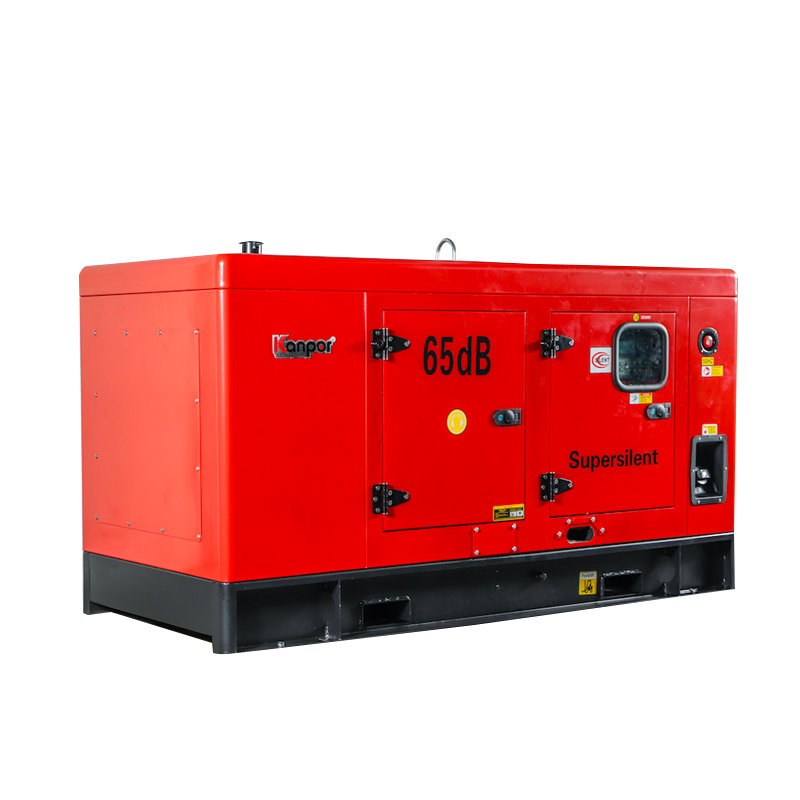
Power outages present a harsh reality for modern commercial facilities. They cost businesses thousands of dollars per hour in lost productivity, corrupted data, and compromised inventory. You need reliable emergency electricity to protect your daily operations. Standard heavy-duty power solutions easily bridge this gap. However, they are often too loud for urban, retail, or strict office environments. This guide provides a detailed procurement-level framework for evaluating the right equipment for your facility. You will learn how to navigate complex acoustics, exact load sizing, and mandatory compliance requirements effectively. We maintain a highly skeptical and practical tone throughout this process. The term "silent" represents an industry standard for heavily attenuated acoustic enclosures rather than absolute zero noise. Your primary goal involves ensuring strict regulatory compliance while maintaining minimal operational disruption during a grid failure.
Key Takeaways
Sizing is critical: Match your facility’s starting and running wattage to avoid "wet stacking" (under-loading) or system failure.
Verify noise ratings: True low noise generators are measured in dB(A) at a standard 7-meter distance under full load.
Site compliance matters: Commercial installations must balance acoustic performance with airflow, exhaust routing, and local zoning ordinances.
Defining "Silent": Acoustic Enclosures and Decibel Standards
People often misunderstand the term "silent" in power generation. The reality of noise attenuation involves advanced mechanical engineering rather than magic. A silent generator uses specialized canopies lined with thick, sound-absorbing acoustic foam. These units also feature baffled exhaust systems and strategically placed air intakes. These engineered components work together to absorb mechanical vibrations and muffle harsh exhaust noise before it escapes the enclosure.
Evaluating dB(A) Ratings
You must evaluate sound level metrics carefully during procurement. Always instruct buyers to request noise data measured at exactly 7 meters (about 23 feet) away from the unit. The testing must occur while the machine operates at 75% to 100% of its maximum load. Some vendors attempt to manipulate these numbers. They might test the equipment at a greater distance or under a very light load to present a lower decibel score.
We can benchmark these noise levels easily to understand their real-world impact. An open-frame, standard commercial backup generator regularly produces 85 to over 100 decibels. Prolonged exposure to this volume causes hearing damage. In contrast, a properly engineered low noise generator typically measures between 65 and 75 dB(A). This output feels equivalent to normal street traffic, a running vacuum cleaner, or a loud conversation in a restaurant.
Zoning and Ordinance Compliance
Before finalizing your purchase, you must check local municipal zoning laws. City noise ordinances strictly govern commercial building operations, particularly near residential zones or hospitals. Nighttime noise limits often drop as low as 60 dB(A) at the property line. Compliance prevents costly regulatory fines and protects your neighborhood relationships.
Table 1: Decibel Benchmark Comparison
Sound Source
Estimated Decibel Level (dB)
Real-World Equivalent
Standard Open Generator
85 - 105 dB
Lawnmower, Motorcycle, Concert
Attenuated Silent Enclosure
65 - 75 dB
Loud Conversation, City Traffic
Strict Nighttime Ordinance
50 - 60 dB
Quiet Office, Moderate Rainfall
Sizing Your Commercial Backup Generator
Correct sizing dictates the absolute success of your emergency power plan. Calculating load requirements demands precision and a clear understanding of your facility's electrical footprint. You first need to differentiate between prime power and standby power ratings. Prime units run continuously as a primary electricity source for off-grid operations. Standby units operate exclusively during utility outages. Equipment rated for standby use typically allows for a slightly higher temporary output.
Calculating Surge vs. Running Loads
You must break down the critical difference between starting (surge) kW and running kW. Heavy machinery, commercial HVAC systems, and server room cooling units require massive initial power surges to start their motors. They settle into much lower running loads mere seconds later. Your new system must handle the absolute peak surge without tripping breakers or stalling the engine.
Audit your critical loads: Identify all life-safety systems, servers, and security networks.
Calculate peak inrush current: Multiply the running wattage of large motors by 3 to estimate their starting requirements.
Factor in future growth: Add a 20% to 25% safety margin to accommodate future business expansion.
The Danger of Oversizing (Wet Stacking)
Many buyers mistakenly believe bigger always means better. Beware the severe danger of oversizing. This error creates a destructive mechanical issue known as "wet stacking." A diesel generator set operates efficiently only when running at a minimum of 30% to 50% of its rated capacity. Running below this thermal threshold leaves unburned fuel in the exhaust system. This unburned fuel causes thick carbon buildup on valves and injectors. It rapidly increases maintenance costs and significantly decreases the engine's lifespan.
Automatic Transfer Switch (ATS) Integration
Your system requires seamless Automatic Transfer Switch (ATS) integration. The ATS monitors incoming grid voltage continuously. It detects grid failure instantly, signals the engine to crank, isolates the building from the utility lines, and transfers the electrical load. A reliable ATS ensures your operations continue safely without any manual human intervention.
Site Planning and Installation Constraints for Commercial Buildings
Site planning involves far more than pouring a simple concrete slab behind your building. Footprint and space requirements dictate installation success. Acoustic enclosures add substantial physical bulk and weight. You must measure the designated equipment pad accurately.
Ensure you maintain mandatory clearances around the entire unit. Technicians need room to open the enclosure doors fully. They require unhindered access for major maintenance overhauls. Standard codes usually require a minimum of three feet of clearance on all sides, though larger industrial units may require much more.
Ventilation and Heat Dissipation
Ventilation and heat dissipation present the most complex challenges. Silent enclosures essentially trade noise reduction for heat retention. They naturally trap high engine temperatures inside the tightly sealed canopy. You must engineer proper airflow pathways to compensate.
Air Flow Direction: Ensure cool air enters the alternator end and hot air exhausts smoothly from the radiator end.
Exhaust Routing: Route dangerous emissions far away from building HVAC intakes, pedestrian walkways, and open windows.
Static Pressure: Calculate the restriction caused by acoustic louvers to ensure the cooling fan operates without stalling.
Security and Weather Resistance
Security and extreme weather resistance play vital roles in your site plan. Evaluate the acoustic canopy materials very closely during procurement. Powder-coated galvanized steel offers excellent baseline durability for most urban environments. However, marine-grade aluminum works significantly better for rust prevention in coastal areas or highly corrosive industrial zones. Quality enclosures provide vital waterproofing and heavy-duty tamper resistance. Lockable access doors protect your expensive equipment from fuel theft and vandalism in open commercial lots.
Evaluating Return on Investment (ROI) and Operational Efficiency
Smart procurement demands careful ROI evaluation beyond just looking at the initial purchase price. Fuel efficiency directly impacts your continuous runtime capabilities during extended grid failures. You need to calculate your required business continuity periods carefully. Common commercial standards aim for 24, 48, or 72 hours of uninterrupted emergency power.
Chart: Estimated Fuel Tank Sizing by Required Runtime
Required Runtime Limit
Typical Application
Tank Configuration Strategy
8 to 12 Hours
Standard Retail / Small Office
Integrated Sub-base Tank
24 to 48 Hours
Manufacturing / Cold Storage
Extended Sub-base Tank
72+ Hours
Data Centers / Healthcare
Large External Day Tanks with Pumps
Maintenance Accessibility
Maintenance accessibility directly affects your long-term operational efficiency. A heavily attenuated enclosure proves entirely useless if your mechanical technicians cannot reach the internal components. Mechanics must easily access the engine block, oil filters, coolant drains, and the alternator.
Evaluate the physical design of the canopy's access doors. Check for easily removable side panels that simplify routine servicing. Some advanced enclosures feature viewing windows for the control panel. This allows operators to check running metrics without opening the doors and releasing noise.
ROI Framing
You can frame your investment mathematically to justify the expenditure. Compare the annualized cost of maintaining the standby power system against the severe financial risks of operational downtime. Factor in the amortized capital expense and your scheduled preventative maintenance contract. Weigh these figures against the lost revenue, ruined inventory, and reputational damage of a single four-hour facility blackout. In data centers, pharmaceutical storage, or heavy manufacturing, this equipment routinely pays for itself during its very first major deployment.
Vendor Shortlisting: How to Make the Final Decision
Selecting the right vendor completely secures your infrastructure investment. You must ask suppliers for hard data upfront. Require them to provide certified acoustic test reports from independent laboratories. Demand detailed fuel consumption curves showing usage at 25%, 50%, 75%, and full load. Never rely solely on glossy marketing brochures or vague sales promises.
Service Level Agreements (SLAs)
Prioritize vendors who offer robust, iron-clad Service Level Agreements (SLAs). You need a partner who provides local, rapid-response maintenance teams. Your contract should explicitly include routine load bank testing services. Load banking artificially simulates a building load to test the equipment. This vital process burns off carbon deposits and guarantees the engine can handle its fully rated capacity during an actual emergency.
Warranty Verification
Warranty verification requires strict and careful scrutiny. You must clearly differentiate between comprehensive coverage and parts-only deals. Parts-only warranties leave you paying thousands of dollars for emergency labor. A silent diesel generator often carries entirely separate warranties for the engine components and the structural enclosure. Ensure the acoustic canopy maintains strong rust, paint degradation, and structural integrity coverage for several years.
Conclusion
Choosing the perfect emergency power unit requires a careful balancing act. You must align your strict acoustic constraints with accurate electrical load sizing. Absolute compliance with local commercial building codes remains mandatory throughout this process.
Validate actual equipment noise levels using 7-meter certified testing data to guarantee zoning compliance.
Size the engine and alternator accurately to prevent detrimental wet stacking and ensure load handling.
Prioritize highly accessible enclosure designs to streamline future maintenance and reduce labor costs.
Invest in rapid-response service agreements for guaranteed uptime reliability during severe weather events.
We highly recommend conducting a professional site energy audit before making a purchase. Consult directly with a licensed electrical engineer to finalize your precise kVA and kW requirements before requesting final vendor quotes. Their expertise ensures you buy exactly what your facility needs to survive the next blackout.
FAQ
Q: What is the actual noise level of a silent diesel generator?
A: A quality enclosed unit operates between 65 and 75 dB(A) when measured from 7 meters under full electrical load. This specific decibel output mirrors the volume of a loud human conversation or passing street traffic. It easily complies with most strict municipal and urban noise regulations designed for commercial zones.
Q: Can I use a residential silent generator for my business?
A: We strongly advise against using residential equipment for commercial operations. Residential models typically provide only single-phase power. Most commercial facilities require robust three-phase systems to safely operate heavy machinery, servers, and HVAC units. Commercial units also feature larger industrial cooling systems designed for extended continuous runtime.
Q: How often does a commercial standby power system need maintenance?
A: You should conduct basic visual checks and fluid level inspections monthly. Schedule professional semi-annual maintenance for comprehensive oil and filter changes. You must also perform annual load bank testing. This specific testing runs the engine at full capacity to prevent wet stacking and verify complete system reliability.
Q: Does the acoustic canopy cause the diesel generator set to overheat?
A: Properly engineered canopies do not cause engine overheating. High-quality enclosures utilize mechanical forced-air ventilation, high-capacity cooling fans, and specialized internal baffling. These elements maintain safe operating temperatures even under continuous heavy loads. However, you must strictly adhere to the manufacturer's installation clearance guidelines to guarantee adequate surrounding airflow.
DONGCHAI POWER devotes itself to manufacuring and maintenance of different types generator, diesel generator, gas generator, silent generator, reefer generator, container generator and sychronization generator.