Purchasing the wrong power unit leads to overloaded circuits, noise compliance violations, or severe EPA fines. Whether you are powering a travel trailer RV or managing a remote job site, guesswork is simply not an option. You cannot afford unexpected power drops or failed safety inspections. Evaluating a power system requires balancing maximum output, physical constraints, fuel economics, and strict regulatory standards. You must account for starting watts, physical space, and specific emissions laws before making an investment. Failing to check these details can damage sensitive electronics or cause premature engine failure. This guide breaks down the exact technical, physical, and compliance criteria you must verify before making a final purchasing decision. You will learn how to size your equipment properly using the 20 percent rule. We also cover essential environmental rules, fuel considerations, and critical safety features to keep your operation running smoothly and safely.
Key Takeaways
Always apply the "20% Rule" to your maximum wattage calculations to prevent continuous full-load operation and extend engine life.
Do not rely on amp ratings alone (e.g., the "50-amp" myth); translate all power needs into starting and running watts.
Fuel choice dictates compliance: gas units must meet EPA EVAP rules, while heavy-duty diesel units require Tier 4 Final compliance.
Confirm specific connection standards, such as TT-30R for RVs or OSHA-compliant GFCI outlets for construction applications.
1. Calculate Your Exact Power Requirements (The 20% Rule)
Sizing your equipment incorrectly remains the most common purchasing mistake. Buyers often underestimate the initial power surge required by heavy appliances. You must calculate precise electrical loads to ensure stable, reliable power delivery.
The "Amp" Misconception
Many consumers fall into the trap of buying based solely on a recreational vehicle or electrical panel amp rating. They assume a "50-amp" RV simply needs a generic 50-amp power source. This assumption is dangerous. Amperage alone does not determine total power needs. You must calculate watts. For example, a 50-amp trailer running at 120V requires 6,000 watts. However, if the system runs at 240V, it requires 12,000 watts. Always convert your panel limits into exact wattage figures before looking at product catalogs.
Starting vs. Running Watts
Appliances demand different power levels when starting compared to running continuously. You must identify the highest power-draw items in your setup. RV air conditioners (typically 15,000 BTU units) and heavy-duty air compressors pull massive surges upon startup. To calculate your actual needs, follow these steps:
List all devices you plan to operate simultaneously.
Sum the continuous running wattage of all these devices.
Identify the single appliance requiring the highest starting wattage.
Add this peak starting wattage to your total running wattage sum.
The Sizing Spectrum
Power requirements vary wildly across different applications. Review the chart below to match your scenario with the correct power tier.
Application Type
Wattage Range
Best Suited For
Small / Recreational
2,500W – 5,000W
Basic travel trailers, single A/C units, weekend camping.
Mid-Size / Dual AC
5,500W – 12,500W
Large RVs, dual air conditioners, extended off-grid stays.
Heavy-Duty / Industrial
10,000W+
Commercial work zones, heavy power tools, welding equipment.
For industrial applications, basic consumer models will fail. A 10-200kw diesel generator is necessary when sourcing a construction site generator running heavy industrial equipment. These high-capacity units handle simultaneous heavy loads without voltage drops.
The 20% Safety Buffer
Never plan to run your power source at 100% capacity continuously. Maxing out the engine leads to overheating, excessive noise, and premature mechanical wear. You must add a 20% margin to your total wattage calculation. If your calculation dictates 8,000 watts, you should size up to at least a 9,600-watt unit. This buffer ensures clean power delivery, reduces operational noise, and protects the engine.
2. Evaluate Form Factor: Onboard vs. Trailer Mounted Generator Sets
Once you determine your power requirements, you must choose the right physical format. The form factor dictates installation complexity, mobility, and ease of use.
Built-In / Onboard Generators
Built-in units install directly into a vehicle's dedicated compartment. Manufacturers design them specifically for motorhomes and large travel trailers. They offer seamless integration.
Pros: They connect directly to the vehicle's electrical and fuel systems. They remain protected from harsh weather. You can start them remotely via push-button from inside the cabin, even while in transit.
Checks: You must measure the exact physical dimensions of the dedicated compartment before purchasing. Ensure the compartment offers adequate ventilation. Proper exhaust routing is critical to prevent dangerous fumes from entering the living space.
Mobile / Trailer Mounted Generators
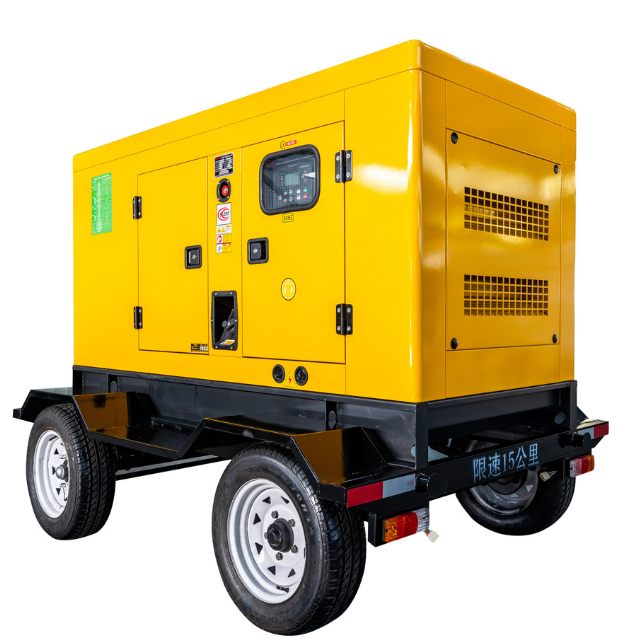
High-draw environments require scalable solutions. A dedicated mobile generator set mounted on its own towable chassis is the standard for commercial and industrial use.
Pros: They provide massive power capacity without consuming internal vehicle space. A trailer mounted generator allows teams to transport heavy-duty power exactly where needed. You can decouple them and leave them on-site.
Checks: Assess the total trailer weight against your vehicle's towing capacity. Verify hitch compatibility (pintle hook vs. ball mount). Check if the unit features highway-rated tires and DOT-approved lighting, or if it strictly uses off-road wheel kits for job site mobility only.
Portable Alternatives
Traditional standalone units offer maximum flexibility at a lower cost. However, you must move them manually and set them up outside at every stop. Alternatively, high-capacity solar stations utilizing LiFePO4 batteries are gaining popularity. These battery banks meet zero-emission requirements perfectly. They remain silent and require no fuel. However, they limit sustained peak output unless you invest in significant battery expansions and large solar arrays.
3. Fuel Type Selection and Runtime Economics
Your fuel choice dictates upfront costs, maintenance routines, and overall operational longevity. Each fuel type serves specific environments and user preferences.
Gasoline (EFI Technology)
Gasoline units remain the most cost-effective option upfront. They offer widespread fuel availability. When selecting a gasoline model, prioritize Electronic Fuel Injection (EFI) technology. EFI engines optimize the fuel-to-air mixture automatically. This improves fuel economy significantly compared to traditional carburetors. EFI also reduces operational noise and prevents frustrating cold-weather starting issues.
Diesel (Portable & Industrial)
Diesel engines dominate the heavy-duty sector. A portable diesel generator offers superior longevity, unmatched torque, and robust power delivery. Though the initial capital expenditure is higher, diesel provides better fuel stability over time. Diesel fuel contains more usable energy per gallon, translating to longer runtimes. This makes diesel the critical choice for high-kW applications, extended off-grid stays, and rigorous commercial use.
Propane/Liquid Petroleum (LP) & Dual Fuel
Propane offers significantly cleaner emissions than gasoline or diesel. Furthermore, propane boasts an indefinite shelf life. It will not degrade or gum up carburetors during long storage periods. Many modern units feature dual-fuel capabilities, allowing you to switch between gasoline and propane seamlessly. Dual-fuel provides essential redundancy. If one fuel source becomes scarce during an emergency, you can easily switch to the other.
Solar/Battery Power
Solar-powered battery banks eliminate ongoing fuel costs completely. They operate in absolute silence. Premium solar systems use Lithium Iron Phosphate (LiFePO4) batteries. These batteries offer over 3,500 charge cycles, easily lasting a decade under normal use. However, you face a high initial investment. You also rely heavily on adequate solar panel exposure to maintain charge during extended use.
4. Verify Noise Limitations and Environmental Compliance
Noise and emissions regulations dictate where and how you can operate your equipment. Ignoring these standards leads to immediate fines, campground evictions, or job site shutdowns.
Noise Benchmarks
Operating a loud engine ruins the outdoor experience and violates local ordinances. The industry standard for noise measurement is taken at 23 feet (7 meters) away from the unit. You should aim for equipment that operates around or below 70 dB(A) under a standard load. Many national parks and RV campgrounds enforce strict noise curfews. Buying a quiet inverter model or a fully enclosed unit ensures compliance with these rules.
EPA and Emission Standards
Environmental Protection Agency (EPA) rules apply strictly to mobile power sources. You must verify compliance before purchase.
Gasoline Units: Verify compliance with EPA EVAP regulations. These rules require specialized carbon canisters and low-permeation vapor hoses to capture fuel vapors. Operating non-compliant units can result in severe compliance fines.
Diesel Units: Heavy-duty diesel engines face stringent particulate matter rules. Ensure your industrial equipment meets Tier 4 Final emissions standards. This compliance is legally required for operation on public land and commercial construction sites.
Carbon Monoxide Risks
Carbon monoxide (CO) poses a lethal threat. Built-in units require meticulously sealed exhaust systems. The exhaust pipe must direct toxic fumes far away from awnings, slide-outs, and windows. Many modern systems now incorporate automatic CO shutoff sensors. These sensors detect dangerous gas build-up and kill the engine immediately. Always install secondary CO detectors inside your living or working quarters.
5. Assess Critical Safety and Ease-of-Use Features
Modern equipment offers advanced features designed to protect your appliances and simplify operation. You should verify these functional elements before finalizing your decision.
RV-Ready Receptacles
Adapters introduce unnecessary resistance and potential failure points. For travel trailers, ensure the equipment includes RV-ready receptacles. Look for a factory-installed TT-30R (Travel Trailer 30-amp Receptacle) or a 14-50R (50-amp) outlet. These plugs allow direct connection to your vehicle. They eliminate the need for aftermarket dogbone adapters, ensuring a safer and more stable electrical link.
Automatic Voltage Regulation (AVR)
Fluctuating power destroys sensitive electronics. Laptops, medical devices, and modern appliance control boards require clean, stable power. Automatic Voltage Regulation (AVR) is essential. AVR systems utilize capacitors to absorb and manage peak surges. They ensure the power output remains steady without aggressive voltage drops or spikes. Choosing a unit equipped with AVR protects your expensive electronics from permanent damage.
GFCI Protection
Workplace safety relies on preventing electrical shocks. Ground Fault Circuit Interrupter (GFCI) outlets monitor the electrical current constantly. If they detect an imbalance, they instantly cut the power. GFCI protection is absolutely non-negotiable for commercial applications. OSHA workplace safety mandates require all temporary power sources to feature GFCI outlets to protect workers in damp or rugged conditions.
Automatic Idle Control
Running an engine at full speed continuously wastes fuel and generates excess noise. Automatic idle control senses the electrical demand dynamically. It lowers the engine RPM when no power is actively drawn. Once a tool or appliance turns on, the engine instantly throttles up to meet the demand. This feature drastically reduces fuel consumption. It mitigates noise pollution and proves crucial for stabilizing engines during cold-weather operations.
Conclusion
Purchasing a trailer generator is a precise calculation, not a casual guess. Your final choice must perfectly align your peak starting watts with your available physical space, fuel logistics, and regulatory environment. Do not ignore the 20% safety buffer when finalizing your power requirements. Operating safely requires checking specific environmental guidelines and identifying necessary outlet configurations. Audit your primary power loads immediately. Measure your exact installation footprint or towing capacity. Finally, filter your shortlist strictly by EPA and OSHA compliance to ensure long-term reliability and safety.
FAQ
Q: What does "RV-Ready" actually mean on a generator?
A: It indicates the unit comes factory-equipped with specific direct-connect receptacles—most commonly the TT-30R (30-amp) or 14-50R (50-amp) plugs. This eliminates the need for bulky dogbone adapters and ensures a secure, weather-resistant connection directly to your RV.
Q: Can I run my trailer generator while driving?
A: Only built-in/onboard generators are designed to run safely while the vehicle is in motion. Standalone portable units and separate towable generator sets cannot safely or legally operate while being transported due to severe fire and exhaust risks.
Q: How do I prevent voltage spikes from damaging my equipment?
A: Look for a generator equipped with Automatic Voltage Regulation (AVR) or choose an Inverter generator. These technologies ensure a stable sine wave, protecting sensitive electronics, laptops, and modern appliance control boards from destructive power surges.
DONGCHAI POWER devotes itself to manufacuring and maintenance of different types generator, diesel generator, gas generator, silent generator, reefer generator, container generator and sychronization generator.