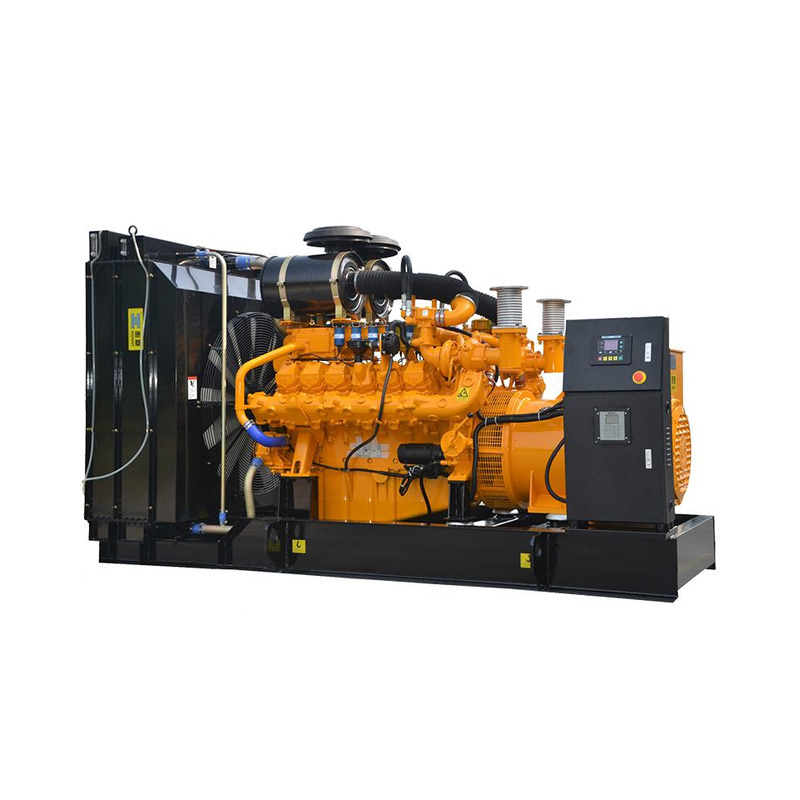
Facility downtime costs are soaring higher than ever. Stricter environmental regulations continually complicate facility power planning. Traditional diesel technology previously dominated the industrial market. Yet, modern facilities are rapidly transitioning away from diesel. They demand cleaner solutions for extended runtimes. Diesel fuel storage introduces severe spill liabilities. It also causes major compliance headaches regarding emissions. You need a reliable, efficient alternative to keep operations running.
This guide provides a strict, vendor-neutral framework. We will help you evaluate, size, and select the ideal equipment. You will smoothly navigate complex infrastructure realities. We avoid underestimating installation requirements. You will learn how to verify utility pipeline pressure properly. We explore engine specifications and analyze physical footprint limits. You will discover practical ways to mitigate single-point failure risks. Proper evaluation ensures your facility stays online during critical outages.
Key Takeaways
Natural gas units eliminate on-site fuel degradation risks but require verifiable utility pipeline pressure and reliability.
Selecting the right industrial gas generator requires balancing steady-state load capacity with slower transient response times compared to diesel.
Total Cost of Ownership (TCO) heavily favors natural gas over a 10-year horizon due to reduced maintenance (no fuel polishing) and lower fuel costs.
Compliance isn't automatic; while functioning as a low emission generator, units must still meet local EPA/air quality board permitting standards.
Why Natural Gas? Framing the Business Case vs. Traditional Fuels
Evaluating fuel sources requires understanding operational risks. Utility-supplied natural gas provides a continuous fuel stream. You completely avoid storing massive quantities of diesel on-site. Eliminating fuel tanks removes expensive spill containment infrastructure. It also stops fuel degradation over time. Diesel suffers from microbial growth and requires regular polishing. Natural gas bypasses these maintenance burdens entirely. You never worry about wet stacking during light load operations.
Corporate sustainability targets drive equipment procurement today. Selecting a low emission generator easily supports your ESG mandates. Natural gas combustion bypasses tightening regulations on particulate matter. You avoid managing diesel exhaust fluid (DEF) systems. Air quality boards look favorably on natural gas installations. These units drastically reduce nitrogen oxide and carbon monoxide outputs.
Grid outages demand extended runtime capabilities. Natural gas systems deliver indefinite runtimes during severe grid failures. Your facility stays online as long as pipeline infrastructure remains intact. Utility pipelines rarely fail during standard electrical outages. This continuous supply provides immense peace of mind. You never scramble to schedule emergency fuel deliveries during a hurricane.
We must address the performance trade-off transparently. Gas engines respond differently to sudden load changes. They take slightly longer to accept a 100% block load compared to diesel. Diesel engines accelerate faster under massive stress. This variance impacts highly sensitive backup power system setups. You must plan your transient response capabilities carefully. Proper engineering mitigates this slight delay effectively.
Comparison Chart: Natural Gas vs. Diesel Operations
Operational Metric
Natural Gas
Traditional Diesel
Fuel Storage Risk
None (Utility Pipeline)
High (Spills, Degradation)
Emission Profile
Low Particulate Matter
High Particulate Matter
Runtime Limit
Indefinite (Pipeline Dependent)
Limited by Tank Capacity
Block Load Acceptance
Slower Transient Response
Rapid Transient Response
Core Evaluation Criteria for Your Industrial Gas Generator
Sizing and Load Profiling
Accurate sizing dictates system reliability. You must calculate running wattage for steady-state operations. You also must determine starting surge wattage accurately. Heavy industrial motors demand massive initial power. HVAC systems draw huge inrush currents upon startup. Manufacturing equipment creates similar electrical spikes. Server racks present non-linear loads. They generate significant harmonic distortion.
Avoid falling into the "rule of thumb" trap. Do not blindly add twenty percent to your peak demand. Over-sizing causes inefficient operation and higher emissions. Follow these structural steps for precise load profiling:
Compile a detailed asset list of all critical facility equipment.
Measure starting surge currents using peak hold multimeters.
Conduct a comprehensive load bank analysis on existing infrastructure.
Review harmonic distortion levels from variable frequency drives (VFDs).
Consult an engineer to size the alternator appropriately.
Applying this rigor guarantees your natural gas generator performs flawlessly. You avoid voltage dips. You protect sensitive electronics from power anomalies.
Alternator and Engine Specifications
You must evaluate prime versus standby power ratings carefully. ISO 8528 standards govern these specific classifications. Standby ratings apply only to emergency situations. Prime ratings apply when the unit acts as the primary power source. You must match the rating strictly to your actual usage. Misapplying a standby unit for continuous use voids warranties rapidly.
Assess engine durability based on combustion technology. Manufacturers offer lean-burn and rich-burn engine designs. You choose based on your specific application and local emission ceilings.
Technology Type
Combustion Characteristic
Best Application Scenario
Lean-Burn Engine
High air-to-fuel ratio, cooler running.
Continuous or prime power with steady loads. Meets strict NOx limits easily.
Rich-Burn Engine
Near stoichiometric ratio, hotter running.
Standby applications requiring rapid load acceptance. Often needs catalytic converters.
Enclosure and Footprint Limitations
Industrial equipment requires adequate physical space. A natural gas genset often requires a larger footprint than equivalent diesel units. You must analyze specific space requirements before purchasing.
Sound Attenuation: Acoustic enclosures add significant bulk to the final footprint.
Maintenance Clearance: Technicians need adequate room to access spark plugs, filters, and control panels safely.
Structural Limits: Check rooftop weight capacities. Heavy alternators and engine blocks require reinforced structural support.
Exhaust Routing: Account for high-temperature exhaust piping clearances from combustible materials.
Failing to plan the footprint leads to costly installation delays. Always secure architectural approvals early in the process.
Navigating Infrastructure Readiness and Pipeline Reliability
Utility gas pressure is entirely non-negotiable. Standard commercial gas pressure often falls short of industrial requirements. You typically need a dedicated, high-pressure line. Most systems require specialized inlet pressures to prevent engine stalling. Address the logistics of upgrading utility meters immediately. Running new lines to the site involves trenching and local permitting. These upgrades require substantial lead times. Coordinate with your local utility provider during the initial planning phase.
Disaster resilience matters greatly. Natural gas relies completely on external pipelines. Localized disasters sometimes disrupt this flow. Seismic events can rupture underground pipes. Extreme freezes drop system pressure. Valve stations freeze during polar vortex events. You must objectively assess your geographic risks. Do not assume pipeline perfection.
Introduce risk mitigation strategies for critical facilities. Consider dual-fuel or bi-fuel configurations as a failsafe. These systems mix gas and diesel seamlessly. Mission-critical facilities require this redundancy. Healthcare centers and data centers demand strict NFPA 110 compliance. Blending fuels mitigates single-point failure risks. If the pipeline drops pressure, the system seamlessly transitions fuels. This ensures life-safety systems remain operational.
Shortlisting Vendors: Procurement Strategy and Next Steps
Evaluating manufacturers goes beyond reviewing technical specification sheets. You must evaluate local distributor networks vigorously. Focus heavily on Mean Time To Repair (MTTR) metrics. Demand guaranteed Service Level Agreement (SLA) response times. When a grid fails, you need rapid, competent support. A reliable gas generator set requires an equally reliable maintenance partner. Ensure they stock critical parts locally.
Understand your warranty options thoroughly. Differentiate between comprehensive warranties and basic parts-only coverage. Labor costs add up quickly during major repairs. Look for extended coverage on vital components. The alternator and engine block need solid, long-term protection. Read the fine print regarding scheduled maintenance requirements. Missing a service interval often voids coverage entirely.
Require a solid proof of concept before signing contracts. Ask vendors for relevant case studies. Request reference calls from similar industrial applications. Speak directly to facility managers in your specific geographic region. Verify the equipment's performance under local regulatory conditions. A proven industrial gas generator deployment gives you confidence. Do not act as a test subject for unproven engine platforms.
Conclusion
Choosing emergency power equipment involves far more than simply comparing wattage outputs. It functions primarily as a major infrastructure project. You must align your facility load profile with precise engine capabilities. Verifying local pipeline pressure ensures uninterrupted operation during crises. Thoroughly vetting vendor support networks guarantees long-term reliability.
Focus on these action-oriented next steps:
Map your transient power loads accurately using professional analysis tools.
Contact your local utility provider today to verify high-pressure line availability.
Demand strict SLA guarantees from any shortlisted equipment vendor.
Do not wait for the next major grid failure to evaluate your readiness. Schedule a comprehensive site audit this week. Request a rigorous load profile assessment from a qualified engineering team. Securing precise technical specifications now protects your operations later.
FAQ
Q: Do natural gas generators require load bank testing?
A: Yes. Load bank testing ensures proper engine lubrication and verifies cooling system integrity. Natural gas units do not suffer from wet stacking like diesel. However, regular testing still confirms performance under stress. It guarantees your system activates flawlessly during an actual grid outage.
Q: Can a natural gas backup generator run continuously?
A: It depends strictly on the rating. Standby generators run only during emergencies. Prime units provide extended power. Continuous-rated models run indefinitely. You must adhere to scheduled maintenance intervals. Always verify the manufacturer’s continuous duty specifications before prolonged, non-stop use.
Q: What happens if utility gas pressure drops during an outage?
A: Modern units detect low pressure immediately. They generate low-pressure fault codes. Automatic shutdowns occur to protect the engine from damage. This highlights why a dedicated high-pressure line is essential. It prevents stalling and ensures consistent power delivery during peak grid failures.
Q: Are natural gas generators compliant with Tier 4 emissions?
A: EPA Tier standards primarily target diesel engines. Gas generators follow localized EPA or CARB emission limits instead. Some lean-burn units meet these stringent requirements naturally. Other rich-burn models require aftermarket catalytic converters. Always verify local air quality board permitting standards before final installation.
DONGCHAI POWER devotes itself to manufacuring and maintenance of different types generator, diesel generator, gas generator, silent generator, reefer generator, container generator and sychronization generator.