High-value temperature-sensitive cargo faces severe risks today. Pharmaceuticals and perishables travel across vast distances daily. They face their highest risk of temperature deviation during intermodal transfers. Customs delays and remote transit add unpredictable waiting times. Even a 30-minute power interruption can prove disastrous. It triggers immediate FDA or GDP compliance failures. Load rejections and massive liability claims soon follow. Protecting your shipments requires reliable, off-grid power solutions.
A dependable reefer generator is not just an optional accessory. It serves as your definitive risk-management tool. It maintains unbroken refrigerated container power across challenging terrains. This comprehensive guide reveals how to evaluate these critical power units. We will show you how to select and operationalize them effectively. You will learn to safeguard your cold chain logistics and prevent costly cargo losses.
Key Takeaways
Relying solely on shore power or truck cab power leaves cargo vulnerable during multimodal handoffs and port congestion.
Choosing between a clip on reefer generator and a slide mount reefer generator depends entirely on your chassis interchange frequency and route types.
Industrial-grade power delivery (460V, 3-phase, 60Hz) and continuous data logging are non-negotiable for FDA/HACCP compliance.
Proper physical integration—utilizing Grade 8 bolts or heavy-duty clamps—and strict pre-trip inspections prevent hardware failure during transit.
The decision to buy versus rent hinges on fleet predictability, required maintenance oversight, and capital expenditure preferences.
The Cost of Disconnection: Why Shore Power and Truck Power Aren't Enough
Continuous temperature control frequently breaks down during multimodal transit. We call these breakdowns "vulnerability gaps." Cargo moves from ships to railcars. It then moves from railcars to trucks. Power often disconnects entirely during these critical physical handoffs. Terminal congestion forces containers to sit in staging areas. High ambient temperatures cause internal container temperatures to spike rapidly. You must understand the limitations of traditional power sources to protect your goods.
Shore power offers excellent economical benefits. Terminals and vessels supply this electricity directly to the container. However, shore power remains strictly geographically bound. You can only use it inside terminal yards. You can only access it on properly equipped ships. It provides zero protection during rail transport. It leaves cargo completely exposed on the highway.
Many operators rely heavily on truck power. This method draws electricity directly from the truck's engine. This approach creates a high level of dependency. The cooling system only runs when the truck engine runs. Drivers must take mandated rest periods. They turn off their engines to sleep. Strict anti-idling laws in many jurisdictions prevent continuous engine operation. Chassis drop-offs also sever the power connection instantly. If the truck breaks down, the cargo immediately begins to warm.
Modern generators solve these vulnerability gaps completely. They act as independent power plants for your containers. They eliminate the risk of temperature spikes during unpredictable transit delays. Here are the core advantages they provide over traditional power sources:
Complete Autonomy: They operate independently from the truck, railcar, or terminal infrastructure.
Extended Run Times: Standard units provide up to 100 hours of continuous operation on a single fuel tank.
Seamless Handoffs: The cooling unit remains powered while cranes move the container between transit modes.
Regulatory Safety: They prevent the critical temperature deviations that trigger immediate cargo rejections.
Evaluating Reefer Generator Architectures for Your Fleet
You must select the right structural architecture for your operational reality. We break down the available solution categories based on actual deployment scenarios. Every fleet manages logistics differently. Your choice depends entirely on how often you swap chassis and move containers.
Clip On Reefer Generator
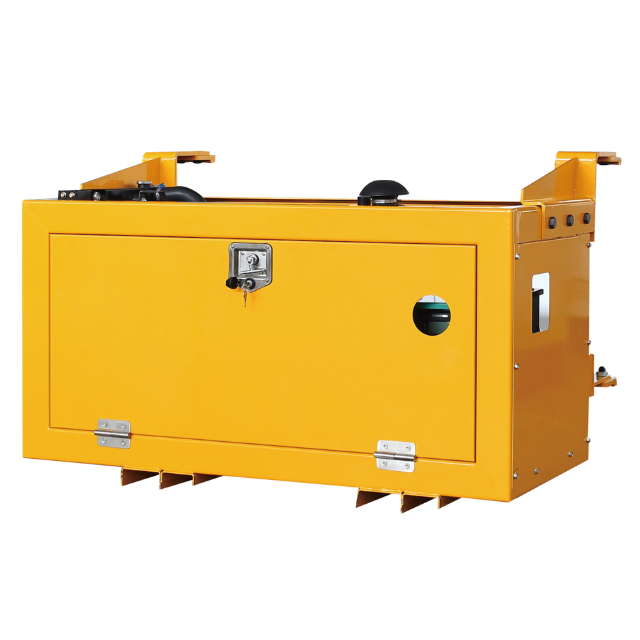
This design mounts directly to the front ISO corner castings of the shipping container. Technicians secure it tightly using heavy-duty clamps. This structural choice makes the unit highly mobile. It stays attached to the container itself.
A clip on reefer generator works best for operations requiring high chassis interchangeability. The power unit simply moves alongside the container. You can load it onto a truck. You can transfer it to a railcar. You can place it in a port holding area. The power supply never leaves the cargo.
You must consider a few operational trade-offs. The unit adds significant forward weight to the container. This alters the weight distribution of the vehicle. It also requires specific heavy-duty handling equipment. You need specialized forklifts to mount and dismount these units rapidly.
Slide Mount (Underslung) Reefer Generator
This architecture takes a completely different physical approach. Mechanics bolt the equipment permanently to the center or rear of the container chassis. It mounts underneath the structural frame. It never attaches to the container directly.
Dedicated cold chain fleets greatly prefer the slide mount reefer generator. It provides an exceptionally low center of gravity. This positioning improves highway driving stability. The chassis frame offers superior shock absorption. The underslung placement also protects the engine from extreme weather and flying road debris.
This system also presents distinct trade-offs. The power source remains tied to the chassis. It does not stay with the container. You lose flexibility if a chassis breaks down mid-route. You cannot simply lift the container and keep the power unit.
Clip-On vs. Slide-Mount Decision Matrix
Feature
Clip-On Architecture
Slide-Mount Architecture
Mounting Location
Container front (ISO corners)
Chassis frame (Underslung)
Interchangeability
Maximum (stays with the box)
Low (stays with the chassis)
Center of Gravity
Higher (front-loaded)
Lower (centered and stable)
Protection Level
Exposed to front-impact weather
Shielded by chassis frame
Deployment Tool
Heavy-duty forklift required
Permanent installation
Technical Non-Negotiables for High-Value Cargo
You must evaluate specific technical criteria before procuring equipment. Enterprise-level logistics demand strict performance standards. You must know exactly what to look for when specifying a refrigerated generator for your fleet. High-value cargo does not tolerate equipment failure.
Electrical output stability stands as your top priority. The equipment must reliably deliver 460V, 3-phase, 60Hz power. Modern container cooling units require this exact specification. The compressor needs immense starting torque. Voltage drops can damage sensitive cooling components permanently. Stable power allows the system to synchronize seamlessly. It functions flawlessly, acting as a high-capacity freezer generator for sub-zero loads.
Fuel efficiency and total autonomy drive your operational success. Inefficient engines consume profits quickly. Look for units maintaining a 0.7 to 1.0 gallon-per-hour consumption rate. You must pair this efficiency with adequate fuel storage. Select a fuel tank capable of covering your longest projected route. Most enterprise fleets require 80 to 100-gallon tanks. This capacity prevents risky refueling stops during cross-country transit.
Compliance and data logging capabilities are completely non-negotiable. Pharmaceutical and food regulators monitor cold chains aggressively. Your unit must support uninterrupted temperature logs. The generator provides the baseline power to keep data loggers active. GDP guidelines mandate continuous tracking for pharmaceuticals. HACCP and FSMA regulations require the same for perishable foods. If the power fails, the logs break. Broken logs mean rejected cargo.
Technical Specifications Baseline Chart
Technical Category
Minimum Required Standard
Operational Purpose
Electrical Output
460V / 3-Phase / 60Hz
Handles high-torque compressor starts without voltage drops.
Fuel Consumption
0.7 - 1.0 GPH
Ensures long-range autonomy and predictable routing costs.
Tank Capacity
80 - 100+ Gallons
Provides 100 hours of continuous off-grid operation.
Data Continuity
Continuous Telematics Power
Satisfies strict GDP, HACCP, and FSMA logging regulations.
Operational Integration and Risk Mitigation
Purchasing the right equipment only solves half the problem. You must address the practical realities of implementation. Proper execution keeps cargo safe on the road. We focus heavily on physical integration and strict operating protocols.
Physical mounting standards require extreme attention to detail. Road shock creates massive structural fatigue over time. You must utilize industrial-grade vibration isolators during installation. Mechanics must use Grade 8 high-strength bolts for all undermount systems. Lower-grade hardware will shear under constant highway vibration. Dropping a power unit on the highway causes catastrophic accidents and total cargo loss.
You must establish strict standard operating procedures (SOPs) for electrical syncing. Drivers and terminal workers need clear instructions. Follow this exact sequence to prevent electrical damage:
Inspect the Plugs: Visually check the heavy-duty 460V pins for corrosion or dirt. Arcing occurs if pins are dirty.
Secure the Connection: Plug the main cable securely into the receptacle. Lock the safety collar firmly into place.
Initialize Power: Turn on the generator output breaker. Verify the control panel displays stable 460V output.
Verify Cooling Transition: Watch the container's cooling unit panel. Confirm it transitions from standby mode to active cooling mode.
Listen for Anomalies: Stand near the compressor. Listen for smooth operation without stuttering or warning alarms.
Internal container prerequisites also dictate your overall success. A generator only powers the cooling system. It does not fix bad loading practices. Internal airflow dictates temperature stability. The shipper must pre-cool the cargo before loading. You must stow all goods strictly within the T-Floor limits. The T-Floor channels cold air under the payload. You must also keep boxes below the designated Red Line. Blocking the upper return air limits circulation and causes heat pockets.
Buy vs. Rent: Commercial Decision Framework
Financial strategy must align perfectly with your logistical requirements. Operators constantly debate the merits of buying versus renting equipment. Your decision rests on fleet predictability and operational needs. We break down the commercial logic for both paths.
Renting serves specific operational profiles exceptionally well. It proves ideal for managing seasonal volume spikes. You might only ship massive volumes of perishable fruit during harvest months. Renting prevents equipment from sitting idle during the off-season. It also suits third-party logistics (3PL) providers testing new routes. Renting effectively offloads all maintenance liability to the leasing company. However, it significantly increases your per-trip operational expenditure.
Buying equipment provides substantial advantages for established logistics providers. We strongly recommend purchasing units if you operate as a dedicated importer or distributor. Consistent, year-round cold chain volume justifies the initial capital expenditure. Ownership secures strict control over your preventative maintenance cycles. You know exactly when mechanics changed the oil and filters. Buying also guarantees absolute hardware availability during peak shipping crunches. You never have to worry about a leasing company running out of inventory.
Conclusion
Protecting temperature-sensitive cargo requires much more than passive insulation. It demands proactive, autonomous power during the most vulnerable transit stages. Modern cold chains face incredible risks during intermodal handoffs and port delays. Equipping your fleet with independent power generation eliminates these critical vulnerabilities entirely.
You must take immediate action to secure your logistics network. First, audit your current supply chain handoff points. Identify exactly where power-loss risks occur. Next, evaluate your current chassis configurations and intermodal routes. Finally, determine whether a front-mounted or underslung solution best fits your operational model. Implementing these steps ensures your high-value cargo arrives safely, compliantly, and profitably.
FAQ
Q: How long can a reefer generator run on a full tank?
A: Most modern units can operate continuously for 80 to 100 hours. This duration depends heavily on total fuel capacity. It also fluctuates based on ambient temperature and the required internal setpoint. Deep freeze loads require more power and consume fuel slightly faster than standard cooling loads.
Q: Does ambient temperature affect the generator’s performance?
A: Yes. Extreme external heat forces the container's refrigeration unit to work much harder. This increased cooling demand raises the electrical load on the power plant. Consequently, the engine consumes fuel at a slightly elevated rate to maintain the required 460V power output.
Q: What routine maintenance is required for a refrigerated container power unit?
A: Pre-trip inspections (PTI) are strictly mandatory before every dispatch. Mechanics must check engine oil and coolant levels. They must ensure the fuel tank is at least three-quarters full. They must inspect all 460V electrical plugs for corrosion. Finally, they must test the automatic start and stop functionalities.
DONGCHAI POWER devotes itself to manufacuring and maintenance of different types generator, diesel generator, gas generator, silent generator, reefer generator, container generator and sychronization generator.