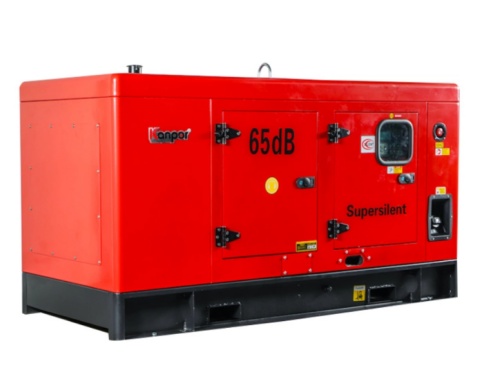
When buyers first look at silent diesel generators, they often focus on one question only: how quiet is the unit? That matters, especially for projects near residential zones, hospitals, hotels, events, farms, or urban construction sites. But for long runtime applications, low noise is only one part of the picture. A silent generator can run for extended hours very successfully, but only when the whole package is matched correctly to the job. Duty rating, load profile, fuel capacity, enclosure airflow, cooling performance, service access, and operating environment all matter just as much as the sound level. In other words, a silent enclosure does not automatically make a generator suitable for continuous or near-continuous work. What makes it suitable is whether the machine has been selected and configured for that duty in the first place. Manufacturers and application guides consistently point to the same fundamentals: understand the application, match the proper generator rating, control average load, protect airflow, and plan fuel and maintenance around real operating hours rather than ideal assumptions.
Start With the Duty Rating, Not the Marketing Label
One of the biggest mistakes in generator selection is assuming that “silent” describes the workload the machine can handle. It does not. It only describes the acoustic treatment of the enclosure or package.
Caterpillar notes that choosing the correct rating begins with understanding the application in detail, including average load factor, maximum required load, annual run hours, and whether the set will run isolated from or in parallel with the utility. Cat’s standby rating is intended for outage backup, with a maximum of 500 hours per year and an average load factor no greater than 70 percent. By contrast, Cummins’ ISO 8528 presentation shows Prime Rated Power and Continuous Operating Power as unlimited-hour categories, with prime for variable load and continuous for constant load.
That distinction matters. If your project involves rental use, remote jobsite power, telecom backup with extended outages, agricultural operations, or off-grid industrial supply, you should usually evaluate a prime or continuous-duty platform rather than a basic standby mindset. Silent diesel generators are suitable for long runtime applications only when the duty class supports the runtime expectation.
Load Management Matters More Than Many Buyers Expect
A generator that is oversized or consistently underloaded may not perform as cleanly or as reliably as expected. Cat warns that diesel generator sets operated at low loads below 30 percent for extended periods can develop wet stacking, a condition associated with unburnt fuel and carbon deposits in the exhaust system. Over time, long periods of underloading can also accelerate wear.
That is why long runtime planning should include a realistic operating load window, not just a peak load number. In practical terms, silent diesel generators used for extended hours usually perform better when they operate within a healthy band rather than idling at very light load for long stretches. For many applications, this means selecting a set that is large enough for starting and transient needs, but not so oversized that it spends most of its life barely working.
Three useful questions before sizing
· What is the expected average load over a normal day
· How often will the set see peak demand
· Will the set spend long periods below 30 percent load
These questions often reveal whether the buyer needs one generator, multiple smaller units, or a different operating strategy.
Fuel Capacity Sets the Real Runtime Window
When people ask whether silent diesel generators can run a long time, they are often really asking about fuel autonomy.
In actual use, runtime is heavily shaped by tank size and load level. Some commercial packages illustrate this clearly. Cummins lists a rental package enclosure with a 24-hour fuel tank at 75 percent prime load, while Caterpillar’s 3516C walk-in enclosure can be configured with an integrated fuel tank base offering up to 24 hours of runtime. These examples do not mean every silent diesel generator runs 24 hours, but they do show how long-runtime design is commonly packaged in the market: fuel storage is engineered as part of the solution, not treated as an afterthought.
For buyers, the lesson is straightforward. If a long runtime diesel generator is required, ask these questions early:
· What is the expected runtime at 50 percent load
· What is the expected runtime at 75 percent load
· Is there an integrated tank or external day tank option
· How easy is refueling during operation, if regulations allow it
A silent enclosure may reduce noise, but it does not create runtime by itself. Fuel planning does.
Cooling and Ventilation Are Non-Negotiable
One reason some buyers hesitate about soundproof units is the fear that lower noise means poorer airflow. That concern is reasonable, because bad enclosure or room design can absolutely shorten reliable runtime.
Cummins’ liquid-cooled generator application manual states that ventilation is necessary to remove heat from the engine, alternator, and other equipment, to remove exhaust fumes, and to provide combustion air. It also warns that poor ventilation design can cause high ambient temperatures, poor fuel efficiency, poor performance, premature component failure, and engine overheating. The same guide says room airflow restriction should be measured before service to confirm it stays below the maximum allowed level.
Why this matters for silent units
A well-designed silent generator enclosure is not just insulated metal. It must control sound while still supporting:
· radiator airflow
· combustion air intake
· hot air discharge
· service access
· weather protection
Cat’s sound-attenuated enclosure literature describes factory enclosures with internally mounted critical level silencers, while the company’s 3516C enclosure emphasizes sound attenuation together with maintenance access, security, and protection from the elements. In other words, a serious silent package is engineered as a system, not just wrapped in extra panels.
A Simple Way to Judge Long-Runtime Suitability
Factor | Why It Matters | What to Check |
Duty rating | Determines whether the set is meant for standby, prime, or continuous use | Standby, prime, or continuous classification |
Average load | Too little load for too long can cause wet stacking | Normal operating load range |
Fuel capacity | Controls practical runtime between refueling | Tank size and runtime at 50% and 75% load |
Cooling system | Long hours create steady heat that must be removed | Ambient rating, airflow path, radiator capacity |
Enclosure design | Quiet operation should not block ventilation or service access | Sound attenuation plus airflow and maintenance access |
Site conditions | Heat, altitude, and dust can reduce performance | Installation temperature, elevation, dust level |
Maintenance plan | Reliability depends on service discipline | Hour-based inspection and maintenance schedule |
This table reflects the main technical issues that decide whether silent diesel generators are suitable for long runtime applications. The answer is usually yes when these seven areas are handled properly, and usually no when buyers focus only on canopy style or price.
Final Thoughts From Our Perspective
From our perspective, the right answer is not simply that silent diesel generators are good or bad for long runtime applications. It is that they are highly effective when selected as working equipment rather than showroom equipment. A quiet canopy is valuable, but long runtime performance comes from the combination of correct duty rating, sensible load matching, stable fuel supply, strong cooling, and maintenance access that people can actually use in the field. We would advise buyers to compare not only sound level, but also prime or continuous-duty suitability, expected runtime at real operating loads, enclosure airflow, and service convenience before making a decision. If you are evaluating models for demanding sites and want to discuss what configuration makes practical sense, you can learn more from Fuan Dong Chai Power Co.,Ltd. From a manufacturer’s point of view, that conversation is most useful when it stays focused on application details, because the best long-runtime silent generator is never just the quietest one. It is the one that can stay quiet, stable, and serviceable through the full duty cycle you actually need.
FAQ
1. Can a standby silent diesel generator be used for long runtime work
Only with caution. Standby units are generally intended for outage backup rather than routine extended-duty service. Cat describes standby generators as limited to 500 hours per year, while ISO-based prime and continuous categories are structured for unlimited hours under the correct load profile.
2. Does a silent enclosure make a generator run hotter
Not necessarily. A properly engineered enclosure is designed to reduce noise while still allowing adequate airflow, heat rejection, and service access. The risk comes from poor enclosure or room ventilation design, not from the idea of sound attenuation itself.
3. What is the biggest runtime risk in an oversized diesel generator
One major risk is extended low-load operation. Cat warns that diesel generator sets running below 30 percent load for long periods can experience wet stacking, with deposit formation and possible long-term wear issues.
4. What should buyers ask first when comparing silent diesel generators
Start with the real duty profile: how many hours the generator will run, what the average and peak loads are, what runtime is needed between refueling, and what ambient conditions the set will face. Those factors determine the correct rating and package far better than sound level alone.


