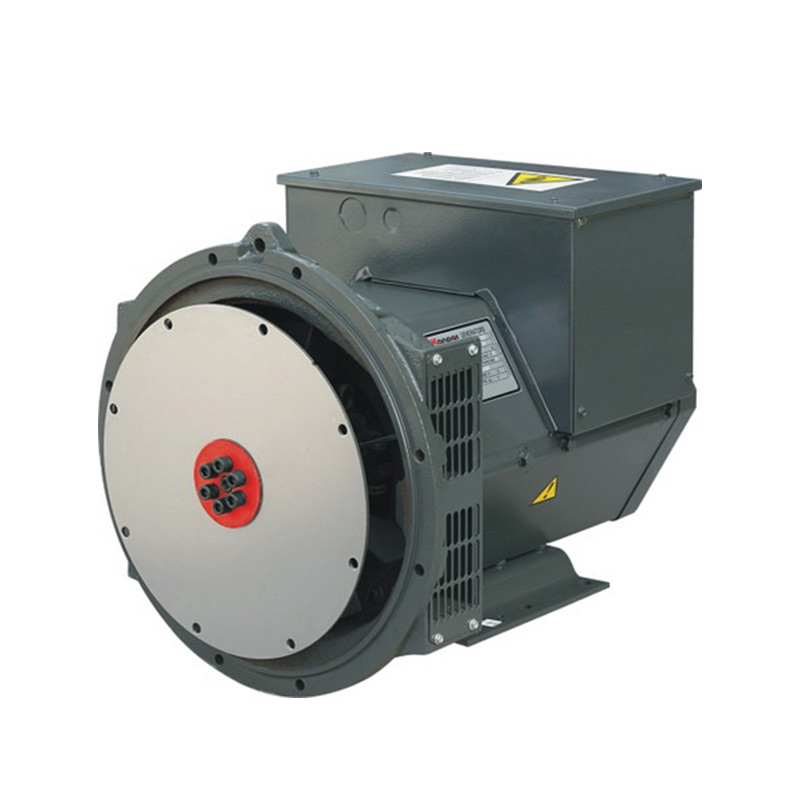
Choosing the right generator means more than just checking a price tag. Can your system survive a sudden power surge? The most critical factor is knowing how to calculate the kVA of an alternator. In this guide, you will learn the essential formulas and safety margins for a perfectly balanced system.

Key Takeaways
● Distinguish kW from kVA: Understanding that kW represents real power while kVA represents apparent power is the first step in avoiding an undersized unit.
● Apply the Power Factor: Use the standard industrial power factor of 0.8 (or your specific equipment's PF) to convert real power into the required kVA.
● Calculate Peak Demands: Account for startup inrush currents from motors and HVAC systems, which can be 2 to 3 times higher than their constant running power.
● Prioritize Real Power Addition: Always sum the real power (kW) of all connected devices first before converting the total to kVA to maintain calculation accuracy.
● Include a Safety Margin: Incorporate a 20–25% buffer above your final calculation to prevent overheating, extend service life, and allow for future load expansion.
● Environment and Usage Considerations: Factor in the intended use (standby vs. prime) and environmental conditions like altitude and temperature that may affect performance.
The Step-by-Step Guide to Alternator kVA Calculation
Calculating the required power for your alternator requires a methodical approach to avoid common sizing errors.
Step 1: Identifying the Total Load in Kilowatts (kW)
The starting point for any calculation is the total power of all electrical devices you plan to connect. You can find this information on the nameplate or in the manual of each device. List every item—from computers to heavy industrial pumps—and sum their rated power in kilowatts (kW).
Step 2: Determining the Correct Power Factor (PF) for Your Load
The power factor (cos φ) represents the efficiency of the energy conversion within your system. In most standard installations, a factor of 0.8 is the common reference point. However, this may shift depending on whether you are powering modern electronics or older electric motors.
Step 3: Applying the Standard kVA Calculation Formula
Once you have the total kW and the power factor, use the standard conversion formula:
$$kVA = \frac{kW}{Power Factor}$$
. For example, if your total load is 80 kW and your power factor is 0.8, your alternator needs to handle at least 100 kVA of apparent power.
Step 4: Accounting for Startup Inrush Current (Peak Loads)
Many devices, particularly those with motors or compressors, require significantly more power to start than they do to run. These startup peaks can be two to three times higher than the rated constant consumption. Your alternator must be able to handle these brief surges without dropping voltage or shutting down.
Step 5: Incorporating a Professional Safety Margin
Never choose an alternator that matches your exact calculated needs perfectly. It is best practice to apply a safety margin so the unit does not constantly operate at 100% capacity. A margin of 20% to 25% above your initial calculation is generally recommended to extend the service life of the equipment.
Step 6: Finalizing the Selection Based on Standard Alternator Ratings
Round up your final figure to the next available standard alternator size. This ensures you have a buffer for performance and reduces the risk of overheating during peak demand periods.
Understanding the Electrical Fundamentals of Your Alternator
To calculate power reliably, you must understand how an alternator interacts with different types of electrical energy.
Defining kVA: The Apparent Power of the Alternator
kVA stands for kilovolt-amperes and represents the "apparent power" of the alternator. It is the total amount of energy being moved through the system, regardless of how much of it is actually doing work.
kW vs. kVA: Why Real Power and Apparent Power Differ
A common mistake is confusing kW with kVA.
● kW (Kilowatts) is the "actual" or "active" power that the connected devices consume to perform tasks.
● kVA (Kilovolt-Amperes) is the "apparent" power that the alternator must provide to cover both the active power and the reactive power (energy lost to magnetic fields).
The Role of the Power Factor (cos φ) in Alternator Efficiency
The power factor is the ratio of real power to apparent power. Think of it as a measure of how effectively the alternator's electricity is being converted into useful work. A lower power factor means more energy is "wasted" in the system, requiring a larger alternator to deliver the same amount of kW.
Alternating Current (AC) vs. Direct Current (DC) Power Realities
This distinction between kW and kVA is typical of alternating current (AC) circuits. In direct current (DC) systems, the power factor is effectively 1, meaning real power and apparent power are identical. Since most modern facilities use AC, managing this gap is a daily task for engineers.
![]()
Key Factors Influencing Alternator Power Requirements
Several variables influence how much power your alternator needs to generate beyond the simple sum of the nameplates.
Impact of Load Types: Inductive vs. Resistive Loads
● Resistive Loads: Devices like heaters and light bulbs have a power factor close to 1. They are simple for an alternator to power.
● Inductive Loads: Equipment with motors or transformers (like pumps or HVAC units) creates magnetic fields that lower the power factor and demand more kVA during startup.
Intended Application: Standby Alternator vs. Continuous Prime Power
Will the alternator serve as a main power source or as a backup? Standby units can often be sized closer to their limits because they run infrequently. Prime power units, which run 24/7, need more headroom to ensure long-term reliability and lower maintenance costs.
Load Sequencing Strategies to Reduce Initial Alternator Strain
In large facilities, you can prioritize loads by connecting them in stages. By not starting every motor at once, you can prevent massive voltage dips and potentially use a slightly smaller alternator while still maintaining system integrity.
Environmental Conditions Affecting Alternator Performance
Operating altitude and ambient temperature can "derate" an alternator. High temperatures or thin air at high altitudes make it harder for the unit to cool itself, reducing its effective kVA output. Always check manufacturer specs if your site is in an extreme environment.
Navigating Power Factors Across Different Electrical Equipment
The relationship between kW and kVA isn't static; it shifts depending on what you plug into the system.
Standard 0.8 Power Factor for Most Industrial Alternators
Most industrial alternator sets are rated based on a 0.8 power factor. This means a 100 kVA unit is designed to deliver roughly 80 kW of useful power. If your system's power factor is lower than 0.8, the alternator will reach its thermal limit before it delivers its rated kW.
High Power Factor Loads: Modern Electronics and LED Lighting
Modern electronic devices often feature power-factor-corrected power supplies. These can have a power factor approaching 1.0. While this is efficient, you must still ensure the alternator's voltage regulation system can handle these types of "leading" loads.
Low Power Factor Challenges: Electric Motors and HVAC Systems
Electric motors are the primary cause of low power factors in industrial settings. When they run under-loaded, their power factor drops significantly, forcing the alternator to work harder to supply the same amount of work.
Why You Must Add kW Before Converting to Total kVA
It is a technical error to simply add up the kVA values of different loads because each may have a different power factor. Instead, add the real power (kW) of all devices first. Once you have the total kW, divide by the system's overall power factor to find the total required kVA.
Load Type | Typical Power Factor | Impact on Alternator |
Incandescent Lighting | 1.0 | Very efficient; kW = kVA |
Standard Electric Motors | 0.8 | Requires 25% more kVA than kW |
Unloaded Induction Motors | 0.2 - 0.5 | Extremely inefficient; heavy kVA demand |
Modern Servers/UPS | 0.9 - 0.95 | High efficiency; low reactive power |
Managing Startup Peaks and High Inrush Currents
Startup demands are often the "hidden" requirement that causes alternator failure if ignored.
Identifying Equipment with High Start-up Demands
Motors, pumps, and HVAC systems are the most common culprits for startup peaks. These devices need a burst of energy to overcome inertia and establish a magnetic field before they can settle into their normal running state.
Calculating the 2x to 3x Peak Multiplier for Alternator Safety
For direct-on-line (DOL) starting motors, the peak demand can be 200% to 300% of the rated power. A motor rated at 35 kW might momentarily demand over 70 kVA just to get spinning. If the alternator cannot provide this burst, the motor may stall or the alternator breaker may trip.
Utilizing Frequency Converters to Soften Load Demand
To avoid buying a massive alternator just for a few seconds of startup, you can use auxiliary equipment. Variable Frequency Drives (VFDs) or soft starters gradually ramp up the power, significantly reducing the initial kVA demand.
When to Consider Oversizing the Alternator’s Internal Components
Sometimes, it is more cost-effective to order an alternator with an oversized alternator (the component inside the generator). This allows the machine to handle high heat and voltage fluctuations from peaks without requiring a much larger engine, saving on long-term fuel costs.
Why a Safety Margin is Non-Negotiable for Alternator Longevity
Running any machine at its absolute limit is a recipe for disaster. Applying a safety margin is a professional necessity.
Preventing Overheating and Continuous High-Load Stress
When an alternator runs at 100% load, it generates maximum heat. Over time, this heat degrades the insulation on the windings, leading to short circuits and expensive repairs. A safety margin ensures the unit runs cooler and lasts years longer.
The Recommended 20% to 25% "Buffer Zone"
General industry standards recommend a margin of at least 20–25% above your calculated kVA. If your math says you need exactly 100 kVA, the correct choice is a 125 kVA alternator. This buffer accounts for minor calculation errors and ensures stability during fluctuating loads.
Future-Proofing Your Facility for Potential Load Expansion
Facilities rarely stay the same size. Adding a new piece of machinery or upgrading an HVAC system later is much easier if your alternator has spare capacity. Sizing it correctly now prevents the need to replace the entire unit when your business grows.
Practical Calculation Example: Sizing a Commercial Alternator
Let's walk through a realistic scenario for a small industrial facility.
Inventorying the Facility Load (Lighting, AC, and Motors)
Assume the following equipment must run simultaneously:
● Office Equipment & Lighting: 15 kW
● Air Conditioning Units: 20 kW
● Industrial Electric Motors: 30 kW
Calculating Combined Real Power and Apparent Power
1. Sum of Real Power (kW): $15 + 20 + 30 = 65\text{ kW}$.
2. Calculate kVA: Using a standard power factor of 0.8, we get $65 / 0.8 = 81.25\text{ kVA}$.
Factoring in Peak Spikes and the 1.25x Safety Margin
Even though the continuous need is 81.25 kVA, the startup peaks of the motors and AC units could easily push the instantaneous demand toward 100 kVA. Applying the 25% safety margin to that peak ($100 \times 1.25$), we arrive at a final requirement of 125 kVA.
Choosing the Correct Rated Alternator for Optimal Performance
In this case, a 125 kVA alternator is the professional choice. It comfortably covers the constant 65 kW load, handles the heavy startup surges of the motors, and operates within a safe thermal range.
Conclusion
Understanding how to calculate kVA is essential to avoid power issues and protect your investment. You must distinguish between kW and kVA to prevent undersizing your unit. Always verify the power factor and account for massive motor startup peaks. Applying the 25% safety margin ensures your equipment lasts longer and saves fuel. Dcgenset offers high-performance alternators designed to handle these demanding loads with ease. Our reliable products provide maximum value by ensuring your facility stays powered under any conditions.
FAQS
Q: What is the formula to calculate alternator kVA?
A: Use the formula: $kVA = kW / Power Factor$ to find the apparent power needed for your alternator.
Q: Why should I apply a safety margin to my alternator?
A: A 20-25% margin prevents your alternator from overheating and extends its overall service life.
Q: How do startup peaks affect alternator sizing?
A: Motors require 2-3 times more power at start-up; your alternator must handle these surges safely.
Q: Can I add kVA values of different loads directly?
A: No, add the real power (kW) first, then convert to total alternator kVA using the power factor.