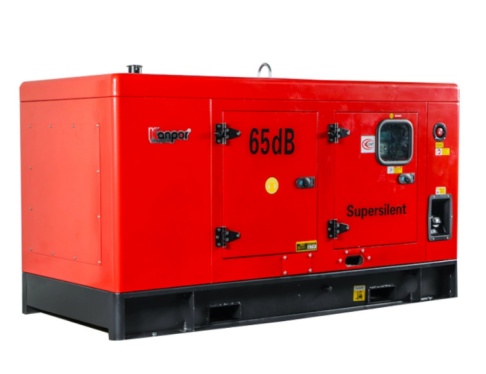
When people first hear the term quiet diesel generators, they often assume there must be a trade-off. If a generator is truly quiet, it may not be powerful enough for demanding applications. If it delivers serious output, many expect it to come with the familiar roar, vibration, and harsh operating sound traditionally associated with diesel equipment. In real-world power generation, however, that assumption is becoming less accurate. Advances in enclosure design, engine optimization, acoustic insulation, airflow control, and system integration have made it increasingly possible for modern quiet diesel generators to achieve both low-noise operation and dependable high power. For construction sites near residential areas, commercial buildings, hospitals, telecom stations, event venues, factories, farms, and emergency backup systems, this balance is not just desirable; it is often essential. The real question is no longer whether quiet diesel generators can reduce noise, but how well they can do so while still meeting demanding load requirements over time.
Why Noise Reduction Matters More Than Ever
Noise used to be treated as a secondary issue in power generation. Today, it is often part of the purchasing decision from the very beginning.
In many operating environments, generator sound levels affect more than comfort. They can influence:
· local regulatory compliance
· worker concentration and safety
· customer experience in commercial spaces
· neighborhood relations on urban job sites
· equipment placement flexibility
A generator that performs well electrically but creates excessive noise may limit where and when it can be used. This is especially true for projects located near offices, hotels, schools, hospitals, retail zones, or mixed-use developments.
The Traditional Assumption: Lower Noise Means Lower Performance
For years, buyers often believed that strong power output naturally required high engine noise, louder cooling systems, and less restrictive structures. From that perspective, soundproofing looked like a compromise.
That assumption came from older equipment designs, where noise reduction often relied on adding enclosure materials without fully redesigning airflow, exhaust routing, or vibration isolation. In such cases, performance could suffer because:
· heat dissipation became less efficient
· service access became more limited
· engine breathing was partially restricted
· enclosure resonance created new acoustic issues
What Makes Quiet Diesel Generators Different?
The difference lies in system design. A quiet diesel generator is typically engineered around several coordinated features rather than a single soundproof layer.
Common Design Elements
· acoustic enclosures with sound-absorbing inner materials
· vibration isolation mounts to reduce structure-borne noise
· optimized exhaust silencers to minimize engine discharge sound
· controlled airflow channels that reduce turbulence noise
· sturdy canopies that help contain and redirect sound energy
· balanced cooling systems that prevent overheating without excessive fan noise
More Than Just a “Silent Box”
A low-noise generator is not truly effective if it sacrifices reliability under heavy load. That is why enclosure design must work together with thermal management and engine efficiency. Good manufacturers pay close attention to the interaction between sound reduction and operating temperature, because power stability depends on both.
Can Low Noise and High Power Really Coexist?
Yes, they can, but only when the generator is designed correctly for its intended output range.
High power does not automatically mean extreme noise. Much of a generator’s total noise comes not only from combustion, but also from:
· cooling fan movement
· exhaust flow
· mechanical vibration
· panel resonance
· air intake turbulence
When these sources are controlled intelligently, overall sound levels can be reduced significantly without undermining usable power. In many cases, quiet diesel generators can deliver substantial continuous or standby power while maintaining noise levels suitable for stricter environments.
That said, the balance is not magic. It depends on engineering quality, proper sizing, and realistic operating conditions. A poorly matched generator running near overload will not remain quiet, efficient, or stable for long. The best results come when sound control and power demand are considered together from the start.
Key Factors That Influence Both Noise and Output
To understand whether quiet diesel generators can truly deliver both low noise and high power, it helps to look at the main design variables involved.
Factor | Effect on Noise | Effect on Power Performance | Why It Matters |
Engine quality | Smoother combustion can reduce harsh sound | Supports stable output and fuel efficiency | Better engines improve both comfort and reliability |
Acoustic enclosure | Lowers airborne noise | Must allow proper ventilation | Poor enclosure design may trap heat |
Cooling system | Fan design affects sound level | Prevents overheating under load | Cooling balance is critical for sustained power |
Exhaust silencing | Reduces exhaust noise | Minimal impact if well designed | Important for site compliance |
Anti-vibration structure | Cuts transmitted noise and shaking | Protects components during operation | Improves long-term durability |
Load matching | Prevents engine strain | Maintains efficient power delivery | Incorrect sizing increases noise and wear |
This is why buyers should not judge a generator only by the advertised decibel figure. A very low noise rating sounds attractive, but if it comes at the cost of weak airflow or unstable load handling, the real-world value may be lower than expected.
Where Quiet Diesel Generators Show Their Greatest Value
Not every application needs the same balance of sound control and output, but many industries increasingly benefit from it.
Construction and Infrastructure Projects
Urban construction often takes place close to residential buildings, offices, and public facilities. Contractors need enough power for tools, lighting, pumps, welders, and temporary site systems, yet must also manage environmental disturbance.
In these settings, quiet diesel generators help teams maintain productivity without drawing unnecessary complaints or restrictions.
Commercial Buildings and Retail Sites
Shopping centers, office complexes, hotels, and restaurants may require backup or supplementary power, but loud equipment can conflict with the customer environment. A quieter generator makes installation more practical, especially in areas where aesthetics and user comfort matter.
Hospitals and Healthcare Support Systems
Healthcare environments demand reliable emergency power, but also require a controlled acoustic environment. Quiet diesel generators are often valued here because lower sound levels reduce disturbance while still supporting critical systems.
Telecom and Data Support
Remote telecom stations and communication infrastructure need dependable power continuity. In such cases, low-noise performance can matter for site approval, nearby communities, and maintenance convenience.
Agriculture and Remote Operations
Farms, irrigation systems, and remote industrial points often need durable diesel power. A quieter unit can improve the day-to-day operating environment for staff while maintaining the output needed for continuous work.
How Technology Helps Close the Gap
The ability of quiet diesel generators to combine low noise and high power is closely linked to improvements in manufacturing and design methods.
Better Engine Efficiency
More refined fuel injection, combustion control, and rotational balance reduce unnecessary mechanical harshness. This can improve both performance and acoustic behavior.
Smarter Airflow Design
One of the biggest challenges in soundproof generator design is cooling. Modern systems use more carefully designed air paths so the generator can dissipate heat while reducing noise leakage.
Improved Materials
Acoustic foams, insulated panels, corrosion-resistant canopies, and better vibration-damping materials all contribute to better generator performance over time.
System-Level Testing
Reliable manufacturers test generator sets under load, rather than relying only on theoretical noise reduction claims. This helps ensure that the equipment can remain stable when the power demand becomes real.
So, Can Quiet Diesel Generators Deliver Both?
The practical answer is yes, but not by default. Quiet diesel generators can absolutely deliver both low noise and high power when the product is engineered as a complete power system rather than a basic generator hidden inside a canopy. Buyers who focus on real operating conditions, not just brochure claims, are more likely to find that balance. In our view, the most successful generator choices come from understanding the application first: required load, runtime expectations, installation environment, local sound limitations, and maintenance needs. At Fuan Dong Chai Power Co.,Ltd., we believe that a good generator should solve operational problems without creating new ones, which is why low-noise performance and dependable output need to be considered together. If you are comparing options for industrial, commercial, or backup use, you are welcome to learn more from Fuan Dong Chai Power Co.,Ltd. and explore which type of quiet diesel generator makes the most sense for your actual working conditions.
FAQ
1. Are quiet diesel generators suitable for continuous industrial use?
Yes, many quiet diesel generators are designed for demanding industrial applications, provided the unit is properly sized and built with sufficient cooling, structural durability, and load stability.
2. Do quiet diesel generators consume more fuel because of their enclosure design?
Not necessarily. Fuel consumption depends more on engine efficiency, generator sizing, and load conditions than on the soundproof enclosure alone.
3. Can a quiet diesel generator be installed near commercial buildings?
In many cases, yes. That is one of their main advantages. Their lower noise profile makes them more suitable for offices, retail sites, hotels, and mixed-use developments.
4. What should buyers compare besides power rating and price?
They should also compare noise test conditions, cooling design, service access, component quality, control systems, and long-term reliability under real working loads.


