Introduction
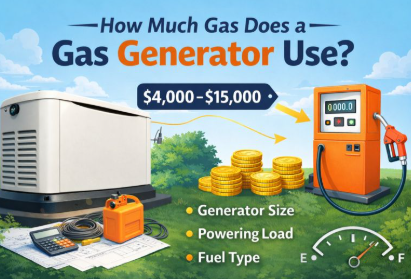
Ever wondered how much gas your gas generator uses during an outage? Understanding gas consumption is key to effective planning. In this article, we will explore how much gas a gas generator uses and what factors influence its consumption. You'll learn how to calculate fuel needs and optimize your generator’s efficiency.
How Gas Generators Work and How They Use Gas
How Gas Generators Convert Fuel into Power
Gas generators work by converting fuel (usually gasoline or propane) into electricity. The process starts when the engine burns fuel to create mechanical energy. This energy turns a rotor that generates electrical power. The amount of electricity produced depends on the engine’s efficiency and the amount of fuel used.
● Engine and Fuel System: The engine burns fuel to produce mechanical energy. This energy turns the alternator, which generates electrical power. The amount of fuel consumed depends on the engine's power output and fuel efficiency.
● Generator Output: The more power your generator needs to produce, the more fuel it will consume.
How Fuel Efficiency Affects Gas Usage
Fuel efficiency in a gas generator is a key factor in how much gas it uses. Efficiency ratings tell you how much fuel is needed to generate a certain amount of power. More efficient generators consume less gas for the same output.
Fuel Efficiency | Fuel Consumption | Power Output |
Low Efficiency | 1 gallon per hour | 2,000 watts |
Medium Efficiency | 0.75 gallon per hour | 2,000 watts |
High Efficiency | 0.5 gallon per hour | 2,000 watts |
● Fuel Efficiency Ratings: A highly efficient gas generator might consume 0.5 gallons of fuel per hour while generating 2,000 watts of power. However, a less efficient generator may consume 1 gallon per hour for the same output.
● Influencing Factors: Fuel efficiency is influenced by the engine design, load being powered, and overall generator quality.
Factors That Affect How Much Gas a Gas Generator Uses
Generator Size and Power Output
The size and power output of a gas generator are major factors in gas consumption. Larger generators generally consume more gas because they are designed to power more devices or larger loads. The power output is typically measured in kilowatts (kW), and the higher the wattage, the more fuel the generator will need.
Generator Size | Power Output | Gas Consumption (per hour) |
Small Generators | 1,000 - 3,000 watts | 0.2 - 0.5 gallons |
Medium Generators | 3,000 - 7,500 watts | 0.5 - 1 gallon |
Large Generators | 7,500+ watts | 1 - 2 gallons |
● Small Gas Generators (1-5 kW): These are ideal for small appliances and can consume between 0.2-0.5 gallons per hour depending on load.
● Medium Gas Generators (5-10 kW): These can handle more appliances and typically consume 0.5-1 gallon per hour under average loads.
● Large Gas Generators (10+ kW): These can power large homes or commercial spaces and may consume 1-2 gallons per hour or more.
Load: How Many Appliances You Are Powering
The number of appliances or devices you are running directly affects how much gas your generator uses. The higher the load, the more gas your generator will consume. For example, running a refrigerator, air conditioning unit, and a few lights will consume more fuel than just powering a single light.
● Low Load: If you're powering just a few small appliances (like lights or fans), a small generator will use less gas.
● Heavy Load: Running multiple large appliances (air conditioner, refrigerator, and heating system) will increase the fuel consumption.
Real-life Example: A 5,000-watt gas generator could consume around 0.5 gallons per hour when powering a few essential appliances but might use 1 gallon per hour when running larger devices like HVAC systems.
Fuel Type and Generator Design
Gasoline and propane are the most common fuels for gas generators. Each type has a different efficiency and impact on gas consumption.
Fuel Type | Efficiency | Pros | Cons |
Gasoline | Less efficient | Widely available, lower cost | Shorter shelf life, less efficient |
Propane | More efficient | Cleaner burn, better efficiency | Less readily available, higher initial cost |
● Gasoline Generators: Gasoline generators tend to be less fuel-efficient than propane generators, but gasoline is widely available.
● Propane Generators: Propane burns cleaner and more efficiently than gasoline, meaning that propane-powered generators can sometimes offer better fuel efficiency. However, propane is not always as readily available as gasoline.
● Eco-friendly Designs: Newer eco-friendly gas generators are designed with fuel efficiency in mind. They may feature advanced engine designs or technologies that optimize fuel use, reducing overall gas consumption.
Estimating Gas Consumption: How to Calculate Your Gas Usage
How to Estimate Gas Usage for Your Generator
To calculate how much gas your generator uses, you can use a simple formula based on the generator’s fuel consumption rate and load.
● Formula:Gallons per hour = Fuel consumption rate (gallons) / Generator output (kW)
For example, if your generator consumes 0.6 gallons per hour and produces 2.5 kW of power, the fuel consumption per hour is 0.24 gallons per kW.
Generator Output | Fuel Consumption (gallons per hour) |
2.5 kW | 0.24 gallons |
5 kW | 0.48 gallons |
10 kW | 0.96 gallons |
Factors to Consider When Estimating Gas Consumption
Several factors can affect your estimates of gas consumption:
● Load fluctuations: When the load varies, so will the fuel usage. Appliances cycling on and off can change the amount of gas consumed.
● Fuel quality: Poor-quality or contaminated fuel can reduce the efficiency of your generator, causing it to use more gas.
● Generator maintenance: Well-maintained generators run more efficiently and use less fuel.
Tip: Regularly maintain your generator by checking air filters, oil levels, and spark plugs to ensure optimal fuel efficiency.
Comparing Gas Consumption for Different Types of Gas Generators
Portable vs. Standby Gas Generators
When it comes to gas consumption, portable and standby gas generators can differ significantly.
● Portable Generators: These generators are typically smaller and designed for occasional use. They consume less gas per hour than standby models when running on lighter loads.
● Standby Generators: These generators are designed for continuous power and often have a higher fuel consumption rate, especially when running at full capacity. They are more fuel-efficient for longer-term use, however, as they are designed to handle heavy loads for extended periods.
Tip: Choose a portable generator for short-term, low-load needs, and a standby generator for consistent, long-term power.
Eco-friendly Generators and Fuel Efficiency
Eco-friendly gas generators are increasingly available and designed to minimize fuel consumption. These generators often include more efficient engines and technologies that help reduce fuel consumption while maintaining performance.
● Hybrid Generators: Some newer generators feature dual fuel capabilities (gasoline and propane) or use renewable energy sources, reducing gas consumption.
● High-efficiency Engines: Modern engines use advanced technologies that increase fuel efficiency, reducing the amount of gas required for the same output.
Note: While eco-friendly generators may have a higher upfront cost, their improved fuel efficiency can save you money in the long run.
How Much Gas Do Gas Generators Use in Real-Life Scenarios?
Real-life Examples of Gas Consumption
The actual gas consumption of a generator depends on various real-world factors, including the load and how long the generator runs. Below are a few examples:
Scenario | Generator Size | Gas Consumption (per hour) |
Home Backup (2,500 sq. ft.) | 5,000 watts | 0.5 gallons |
RV Use | 3,000 watts | 0.4 gallons |
Construction Sites | 10,000 watts | 1 gallon |
Conclusion
In this article, we explored the factors that affect gas consumption in gas generators, including generator size, load, and fuel type. We also provided tips for calculating fuel use and offered comparisons between different types of gas generators. Understanding these factors allows you to choose the right generator for your needs while maximizing fuel efficiency.
Tip: Whether you choose a portable or standby generator, it’s important to balance gas consumption with power output to ensure both efficiency and reliability during power outages. At Fuan Dong Chai Power Co., Ltd., we offer a range of high-quality gas generators designed to meet your specific power needs efficiently. Contact us today for expert advice and a customized solution.

FAQ
Q: How much gas does a gas generator use per hour?
A: The amount of gas a gas generator uses depends on its size and load. On average, a small 1-5 kW generator uses 0.2 to 0.5 gallons per hour, while larger generators (10 kW+) may consume 1 to 2 gallons per hour under typical loads.
Q: How can I calculate gas usage for my gas generator?
A: To estimate gas usage, divide the generator's fuel consumption rate (gallons per hour) by its power output (kW). For example, a generator using 0.5 gallons per hour at 2.5 kW power output uses 0.24 gallons per kW per hour.
Q: What factors affect gas consumption in a gas generator?
A: Gas consumption in a gas generator is influenced by its size, the load it’s powering, the fuel type, and its efficiency rating. Larger loads or less efficient generators typically use more gas.
Q: Does a larger gas generator consume more fuel?
A: Yes, larger gas generators with higher power output generally consume more gas. For instance, a 10 kW generator will use more gas than a 2.5 kW generator, especially under heavy load.
Q: How can I reduce gas consumption in my gas generator?
A: To reduce gas consumption, use a generator that matches your power needs, maintain it regularly, and minimize the load it powers. Also, consider eco-friendly or energy-efficient generator models.